
Start With the Setting, Then the Stone: How to Design Your Engagement Ring
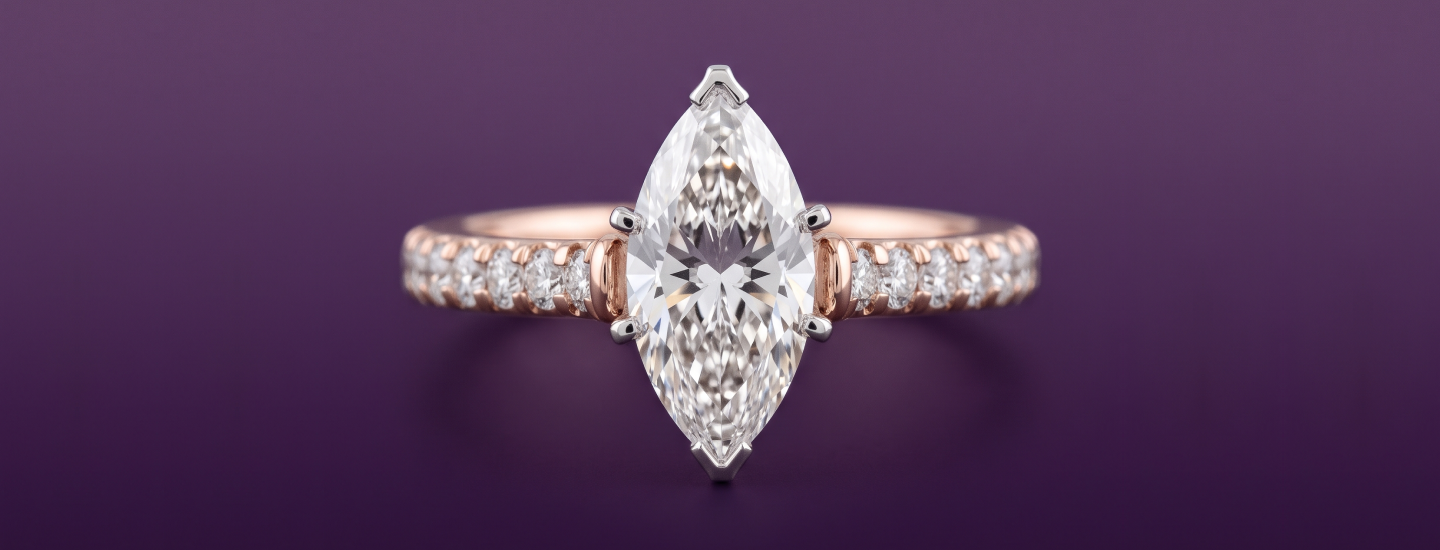
An engagement ring is usually decided in two parts. The setting holds the stone, and the stone changes how the setting reads. Many people begin by picturing the diamond, then find the setting shapes the ring more than they expected. Learning how to design your own engagement ring in the right order makes both choices easier.
A ring is a setting and a stone
The setting is the frame: the metal, the head that holds the stone, and any diamonds set along the band. The stone is the center of the ring. Each choice changes the other. A marquise sits differently in a setting than a round does, and a band with diamonds along its shank changes how the whole ring reads.
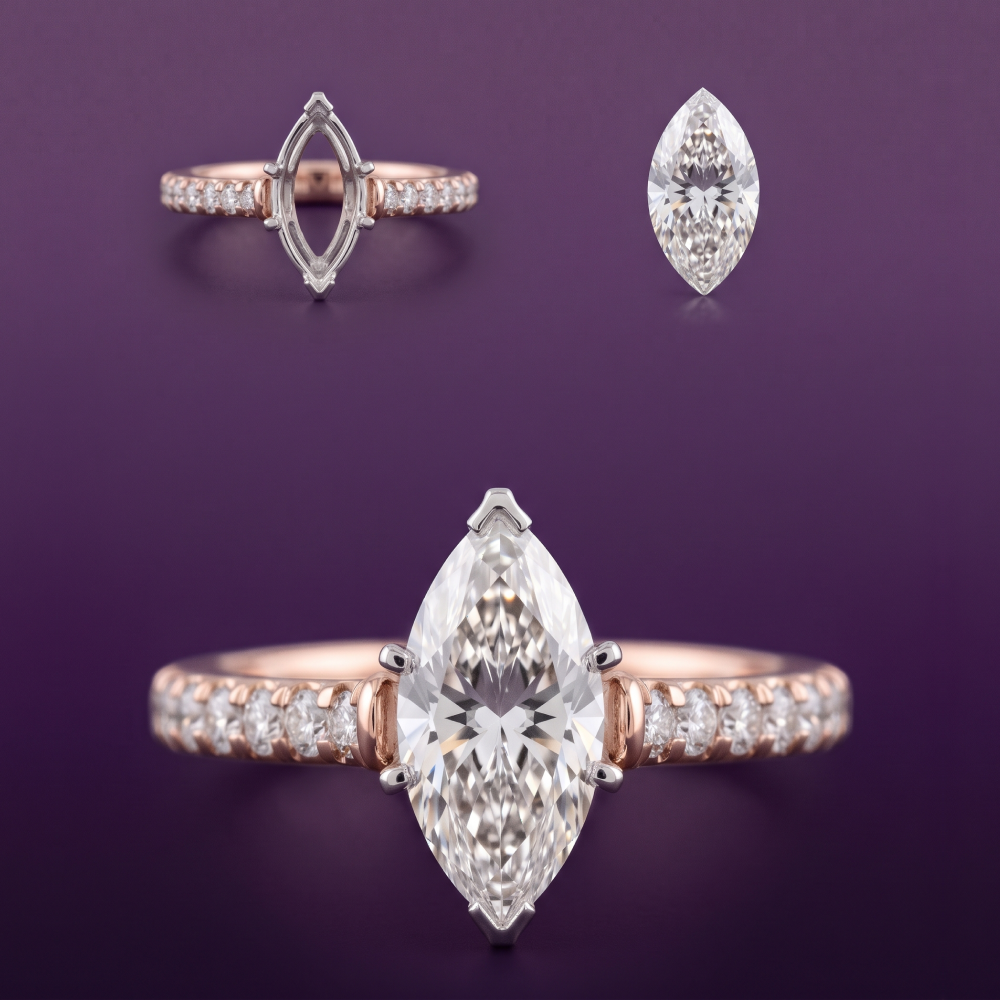
When you design a ring at SAMA, you choose a setting or a stone first, then choose the other. Your finished ring appears in the third step. Working through the choices in sequence also means you do not have to compare finished rings across many tabs. Each step narrows the next.
Start with the setting
Begin with the setting, because it frames everything that follows. On the Start with a Setting page, you can browse classic, vintage and modern settings, then filter by setting style, center stone shape and metal. You can also start with a stone and choose the setting after.
How you want to wear it
Think about how the ring will sit on your hand every day. Some settings sit close to the hand, while others raise the stone higher. Our guide to solitaire, halo and three-stone settings compares how each style wears.
Choose the metal with the setting
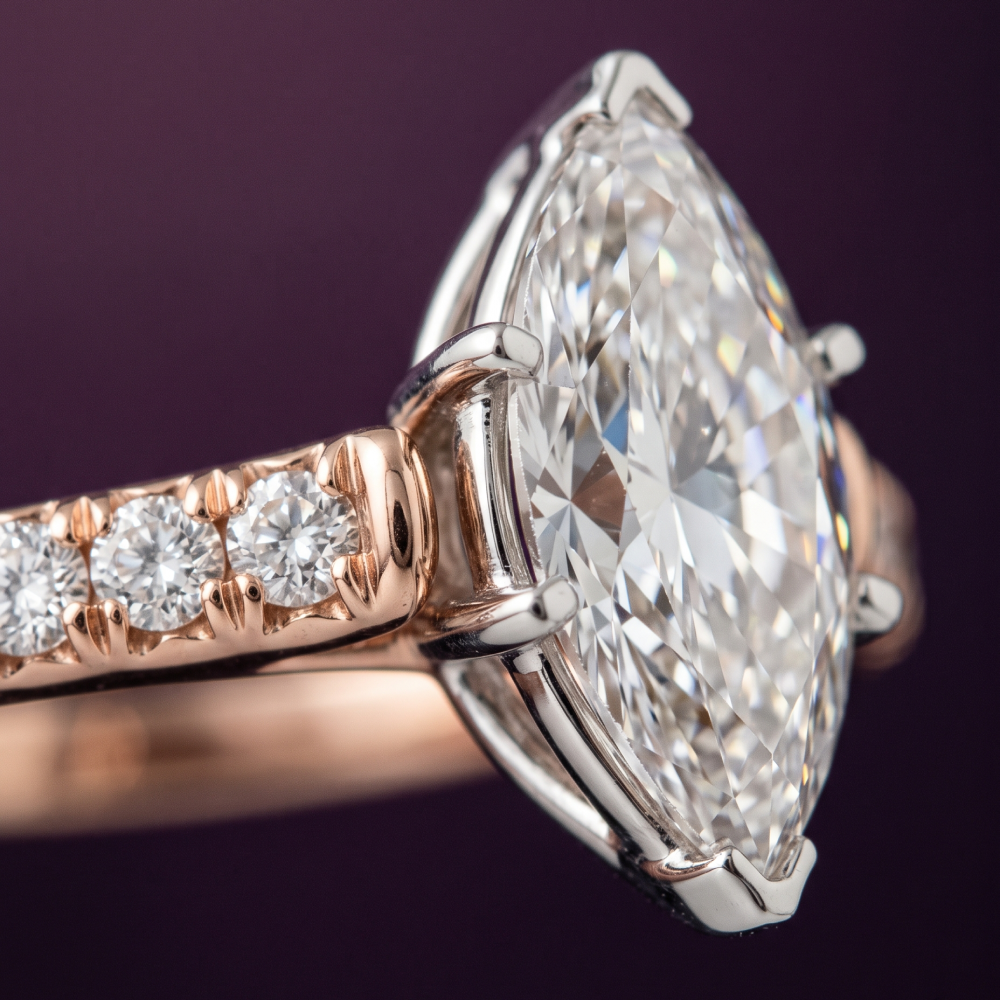
Yellow gold, white gold, rose gold and platinum are all available. The metal sets the tone of the whole ring, so choose it alongside the setting rather than after it.
Then choose the stone
With the setting chosen, the stone is the next decision. You can start with a diamond or with a gemstone.
Natural or lab-grown diamonds
Both natural and lab-grown diamonds are available in the builder, and both come as certified diamonds. Some people weigh origin first, while others weigh the look of the stone itself. Either path leads to a ring made to order.
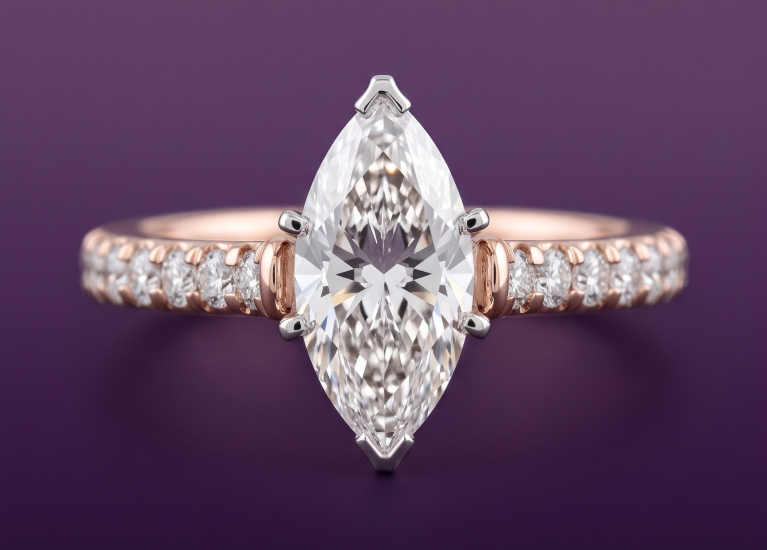
The ring pictured above is an Aida marquise in rose gold. Aida is also available in other shapes, including round, princess, oval, marquise, pear, cushion and emerald, so the outline can change while the metal and setting stay the same.
For how each stone holds up to everyday wear, see our guide to diamond and gemstone engagement rings. For a closer look at lab-grown or natural diamonds, read our specialist’s guide.
Shape changes the outline
Shape changes the outline on the hand, even when the setting stays the same. Aida, for example, is available in several shapes, including round, princess, oval, marquise, pear, cushion and emerald. Shape is the next decision to make after the setting.
Gemstones as the center stone
If color comes first, the builder also lets you start with a gemstone. Gemstone rings follow the same 14-business-day timeline as our diamond rings. Explore the gemstone options here.
Your design at a glance
| Choice | What it shapes | Options |
|---|---|---|
| Setting | The frame, and how the ring wears | Classic, vintage or modern |
| Metal | The tone of the whole ring | Yellow gold, white gold, rose gold or platinum |
| Stone | The outline and the color | A natural or lab-grown diamond, in the shape you choose, or a gemstone |
| Timing | When the ring arrives | 14 business days from order, plus free 2-day insured shipping |
How a designed ring is made
Every ring is made to order in the USA. A designed ring takes 14 business days from order, whether the center stone is a diamond or a gemstone. Free 2-day insured shipping follows. For how that timing works around the holidays, see our custom timeline guide.
Designing it together
Some couples design a ring in one sitting. Others take turns. One person may start with the setting and the other with the stone, or you may work through the builder together. The order keeps the decisions manageable: setting first, then metal, then stone.
A few questions can guide the conversation. How do you want the ring to feel on an ordinary day? Which metal do you already wear? Do you want the stone to be the main feature, or the setting? These questions do not have a right answer. For the full sequence, read our guide to five decisions in the right order.
Start with a setting
Setting, then stone. Each choice narrows the next, and the ring you design is made to order from the choices you make. When you are ready, begin on the setting page.
If color comes first, start with a gemstone.
FAQs
Can we choose a natural diamond and a lab-grown diamond?
Both are available in the builder, and both come as certified diamonds. For a closer look at how the two differ, see the lab-grown or natural guide.
How long does a designed ring take?
A designed ring takes 14 business days from order, whether the center stone is a diamond or a gemstone. Free 2-day insured shipping follows.
How is Rock Your Way different from the Ring Builder?
The Ring Builder starts from a setting or a stone, then adds the other. Rock Your Way is fully custom and is built from scratch. Our estimate for Rock Your Way is about 6 to 8 weeks.