
Lab-Grown or Natural Diamond? A Diamond Specialist’s Honest Guide
By Shanti Amala Sekhon, Founder of SAMA · GIA Graduate Diamonds (GD)

The question I’m asked most often about diamonds isn’t which kind is better. It’s whether anyone will be able to tell.
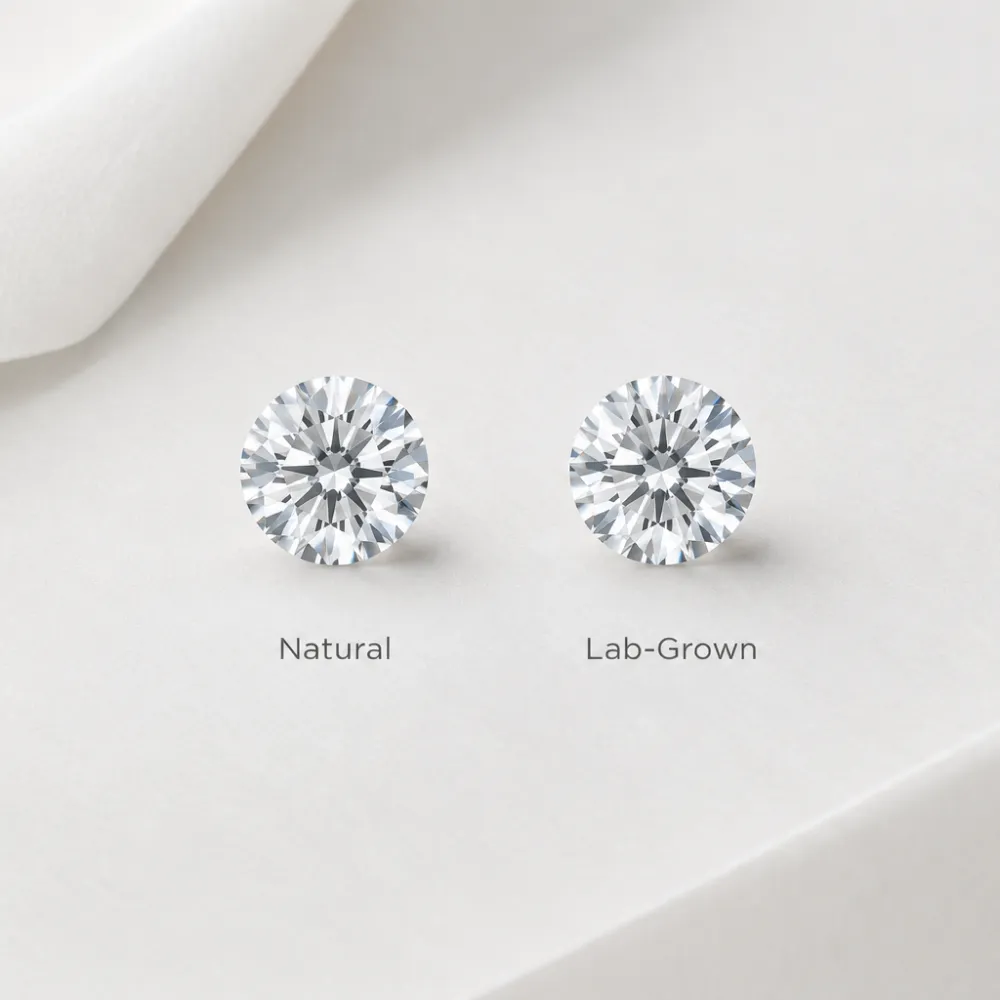
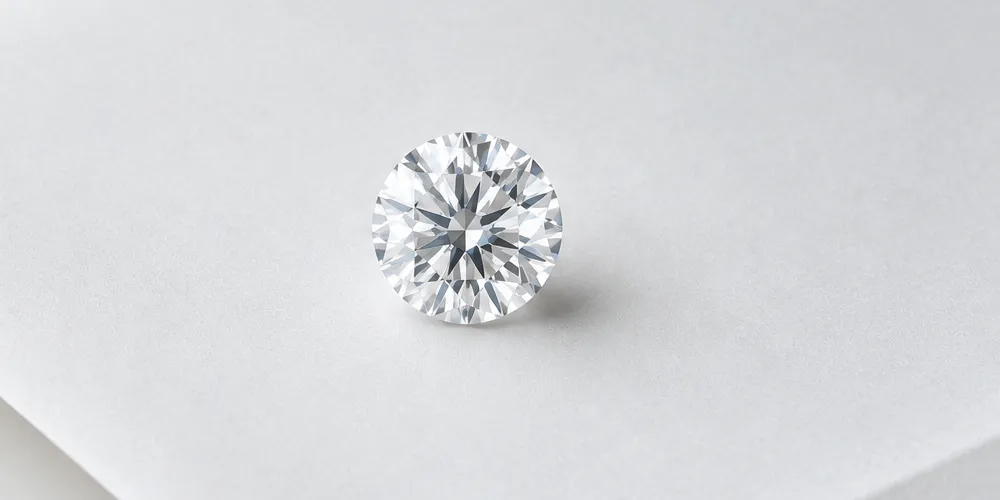
The honest answer is no, not by looking. A lab-grown diamond and a natural diamond of the same cut, color and clarity look the same to the eye. No one can confirm which is which just by looking, me included. Part of my training through GIA’s Graduate Diamonds program was learning when a stone needs advanced laboratory testing, and origin is one of those questions.
So when you’re choosing the diamond for an engagement ring, the real decision isn’t about appearance. It’s about origin, what the certificate tells you, your budget, and what matters to you. At SAMA we offer both, so I have no reason to nudge you either way. Here’s how I’d walk a friend through it.
At a glance
| Natural diamond | Lab-grown diamond | |
|---|---|---|
| Material and hardness | Diamond | Diamond (same) |
| Appearance to the eye | Same | Same |
| Where it formed | Deep in the earth, most more than a billion years ago | Grown in a controlled environment, typically in weeks |
| What the report shows | Full 4Cs grades (GIA or IGI) | Full grades (IGI), or Premium/Standard (GIA, since Oct 2025) |
| Price | Generally higher | Generally lower at comparable size and quality |
What’s Exactly the Same
Start with what doesn’t change. A lab-grown diamond is a diamond: the same carbon, the same crystal structure, the same hardness. Both sit at the top of the Mohs hardness scale, so a lab-grown engagement ring handles daily wear (desks, gym bags, washing up) exactly as a natural one does, and both need the same care. A well-cut stone of either origin returns light in the same way, which is why cut matters far more than origin to how a ring actually looks.
That’s also why you’ll always see it called a lab-grown diamond. Naming the origin clearly is the standard, and it’s how you know exactly what you’re buying.
By eye, no one can tell. Confirming whether a diamond is lab-grown or natural takes advanced laboratory testing. That’s why the certificate matters so much, along with the report number laser-inscribed on the stone’s edge if it has one, as lab-grown diamonds do.
What Actually Differs in an Engagement Ring Diamond
Where It Formed
Most natural diamonds formed deep in the earth more than a billion years ago. A lab-grown diamond typically grows in a controlled environment in a matter of weeks. It’s the same material, with a very different journey.
What the Certificate Tells You
This is the part most guides haven’t caught up with. Every SAMA diamond, natural or lab-grown, comes with a report from either GIA or IGI. What that report shows depends on which lab issued it and on the diamond’s origin:
Reading your certificate
| Diamond | Report from | What you’ll see |
|---|---|---|
| Natural | GIA or IGI | Full grades for color, clarity and cut |
| Lab-grown | IGI | Full grades for color, clarity and cut |
| Lab-grown | GIA (since Oct 1, 2025) | An overall classification of Premium or Standard |
Neither format is a warning sign. GIA made the change because, in its words, most lab-grown diamonds fall into a very narrow range of color and clarity. It just means that when you compare two lab-grown diamonds, you should check which lab issued each report first, because a letter grade and a Premium label aren’t measuring the same thing.
Price
A lab-grown diamond generally costs less than a natural diamond of comparable size and quality. For many people, that difference becomes a larger stone, higher grades, or more room in the budget for the setting. The simplest way to see it is to choose one shape and carat weight in our ring builder and look at both.
If you’d like the full background on either, our lab-grown diamond guide and natural diamond guide go deeper.
What I Check First, Whichever You Choose
When I evaluate a diamond, origin isn’t my first question. These are the three things I look at, in this order, for every stone:
- Cut. Cut decides how well a diamond returns light, so how bright and lively it looks. A beautifully cut stone can look brighter than a larger stone with a weaker cut. In ordinary daylight, a well-cut diamond looks lively from edge to edge rather than dark in the center.
- The certificate. Is it from GIA or IGI, does it describe this exact stone, and, if the stone is laser-inscribed, does the number match the report?
- How it looks set. A diamond on a grading tray and a diamond in a ring are different things. I want to see how the setting holds it and how it reads on a hand in everyday light.
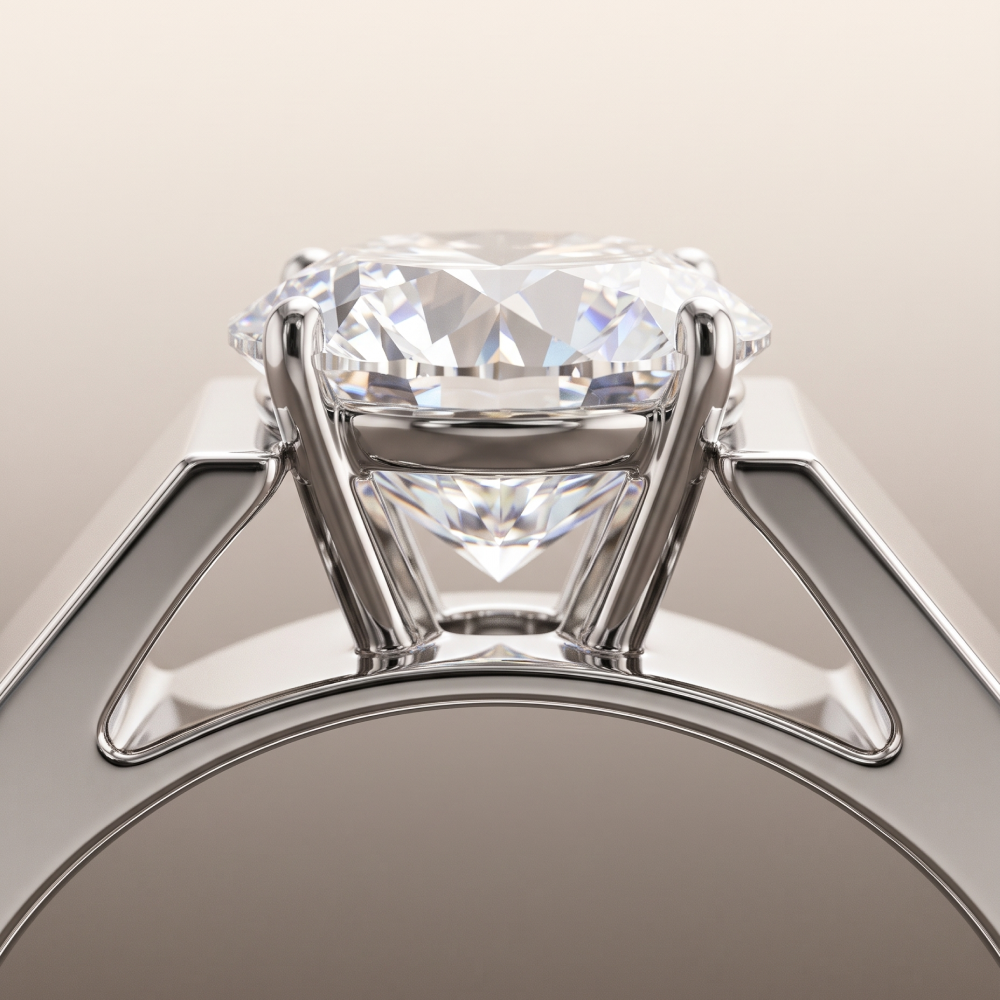
Natural or lab-grown, I hold every diamond to those same three checks. If you’d like to go deeper on the first one, here’s how cut affects sparkle.
When Each Makes Sense
A lab-grown diamond may suit you if:
- You’d like a larger diamond, or higher color and clarity, within your budget.
- You’d rather put more of your budget into the setting or metal.
- Specific grades matter to you. In that case, check whether your stone’s report is from IGI, which lists them.
A natural diamond may suit you if:
- A stone that formed in the earth carries meaning for you. That’s a legitimate reason on its own.
- Tradition matters to you or your family.
- You’d like your diamond graded on the full natural-diamond scales.
And here’s what I’d tell my best friend: choose the diamond you’ll love wearing every day, not one you’re planning to sell. A ring is something you live with.
Comparing Them Side by Side at SAMA
At SAMA, both are in the same ring builder. You can start with a natural diamond or start with a lab-grown one, compare the same shape and carat weight, and then choose your setting. Or you can start with a setting and add either stone. If you’re still working out the order of these decisions, our guide to choosing an engagement ring in five decisions walks through it. If you’re weighing a diamond against a colored gemstone, our guide to diamond vs. gemstone engagement rings covers that next.
Formed in the earth
Start with a Natural Diamond
Browse natural
Grown in a lab
Start with a Lab-Grown Diamond
Browse lab-grownProposing at Thanksgiving? Place your order by Friday, October 30. See all order-by dates.
The Choice Is Yours to Make
Both are diamonds, and both can be beautiful, honest choices. The difference is in the story and the budget, and only you can weigh those. If you’d like a second opinion on a specific stone, book a consultation and ask me directly.
FAQ's
How can I confirm my diamond’s origin after I buy it?
Start with the report that comes with your diamond. Every SAMA diamond has one from GIA or IGI, and it states whether the stone is natural or lab-grown. You can enter the report number into that lab’s own online tool (GIA’s Report Check or IGI’s report verification) to confirm the record. If your diamond is laser-inscribed, a jeweler can use a loupe to check that the number on the stone matches the report.
Why doesn’t my GIA lab-grown diamond report show a color or clarity grade?
Since October 1, 2025, GIA describes lab-grown diamonds as Premium or Standard instead of assigning specific color and clarity grades. IGI reports for lab-grown diamonds still list full grades, and natural diamond reports from either lab are unchanged.
Is a lab-grown diamond a real diamond?
Yes. It’s always described as a lab-grown diamond so its origin is clear, and it has the same material, crystal structure and hardness as a natural diamond.
Do lab-grown and natural diamonds need different care?
No. They have the same hardness and need the same care: a soft lint-free cloth, a soft brush for detailed settings, no harsh chemicals, and a regular check of the prongs. See our jewelry care guide.
Can I compare a natural and a lab-grown diamond for the same ring at SAMA?
Yes. In our ring builder you can start with either one, compare the same shape and carat weight, and pair it with your chosen setting. If you’d like help, book a consultation.