How to Choose an Engagement Ring: 5 Decisions, in the Order That Makes Them Easy
If you’ve started looking at engagement rings, you probably have twenty tabs open and a growing sense that every ring is beautiful and none of them is obviously the one. That feeling isn’t indecision. It’s a sequencing problem.
Most people start with a ring they saw online, then work backward into a budget, a stone and a metal. Every new ring resets the whole search. Choosing an engagement ring gets much easier when you make the decisions in an order where each one narrows the next. Here’s the order we recommend, and what each step settles for you.
Why the Order Matters
When couples are asked what matters most in an engagement ring, they rank the shape of the stone first, then the style or setting, then the metal. Nearly 90% now customize their ring in some way. So you’ll be making these choices either way. Make them in the right order and you’ll make each one only once.
Budget isn’t on that list because it isn’t a preference. It’s the frame the other choices sit inside, which is why it comes first.
The five decisions, in order
- 1
Budget
Sets the size of your stone
- 2
Shape
Opens your setting options
- 3
Setting
Decides how it wears
- 4
Metal
Sets the color around the stone
- 5
Stone
Narrowed by everything above
1. Set Your Budget First
Budget comes first because it shapes everything after it, especially the size of the center stone. Decide on a number you’re comfortable with and a ceiling you won’t cross, before you fall for a specific ring.
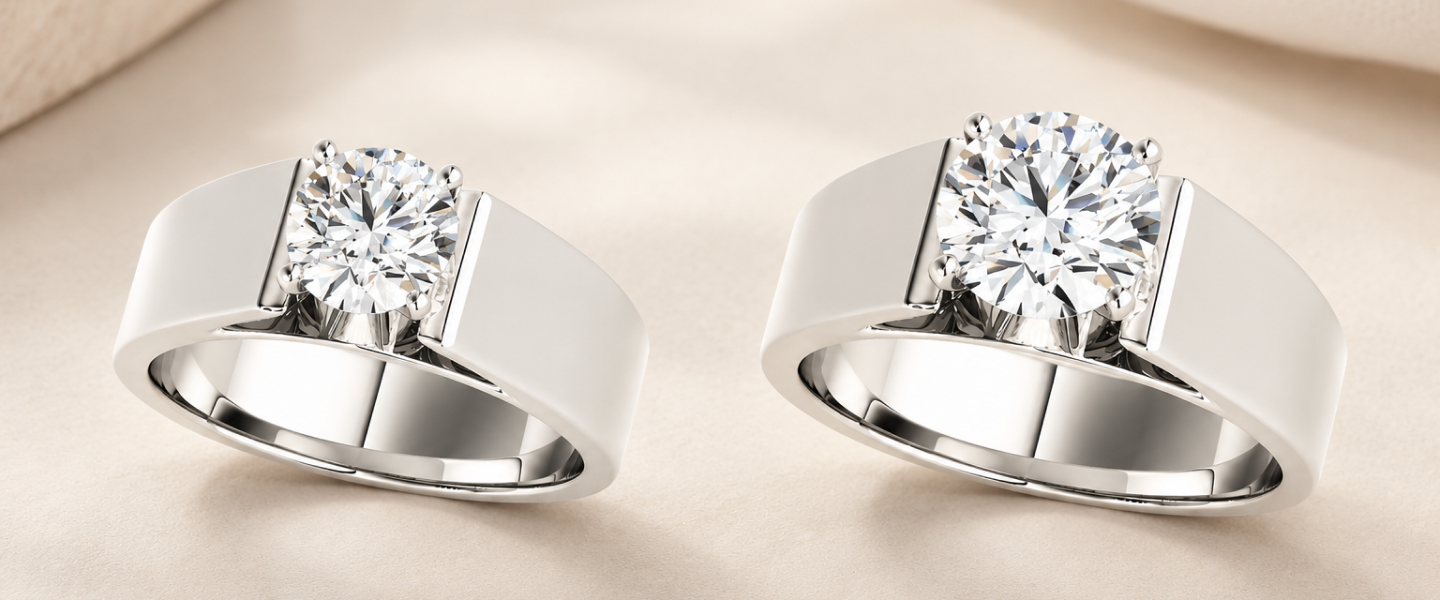
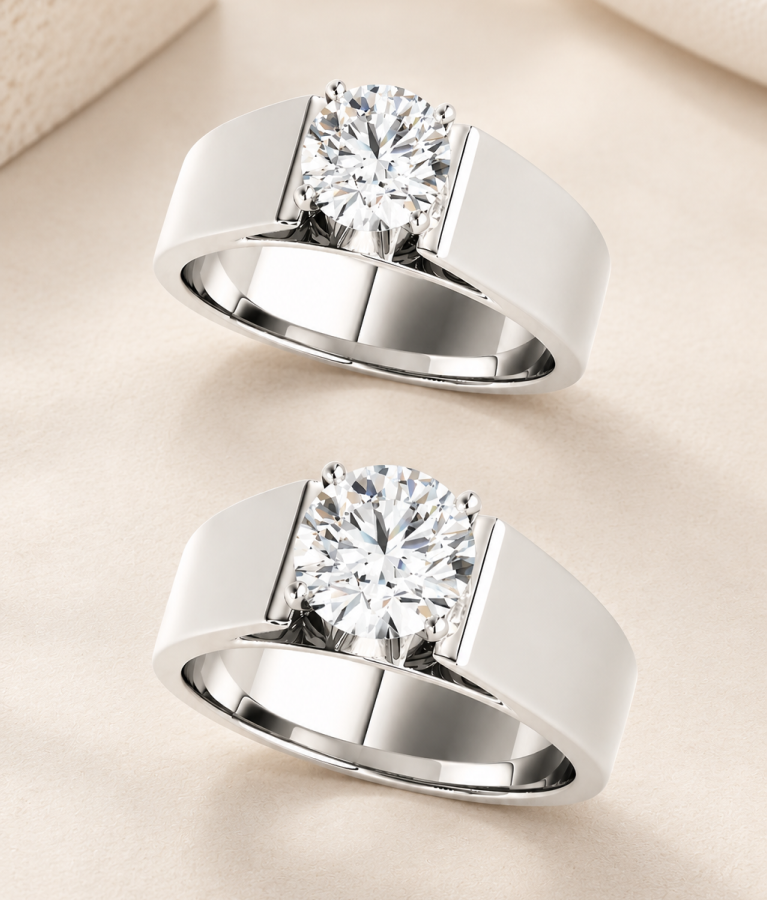
To give you a sense of range at SAMA (prices at the time of writing, October 2026): our fully composed engagement rings start at $1,735, and an Aida 1 ct round solitaire is $2,390 in 18K gold. Within a single design, carat weight is what moves the price most. Bora in 18K gold is $3,510 at 1 ct, $4,475 at 2 ct and $5,190 at 3 ct.
Whether you choose a lab-grown or a natural diamond also changes what your budget buys. Our guide to lab-grown vs. natural diamonds explains how.
2. Choose the Shape
Shape is the first thing anyone notices, which is why it matters most to most people. The round brilliant is known for having the most brightness of any diamond cut. An oval brings a similar fire and brilliance into a longer outline that can make fingers look more slender. In a well-cut oval, the faint darker “bow-tie” across the center stays subtle.
Shape matters early because it opens and closes doors. Some settings are designed around one shape: Bora is built around a round center, while Rania grand is designed for an oval.


Still deciding? Our guide to diamond shapes walks through all seven.
3. Pick a Setting
The setting decides how the stone sits, how much of it shows, and how the ring wears day to day. A solitaire keeps the attention on one stone. A halo frames it with smaller diamonds. A hidden halo tucks a row of small diamonds beneath the center stone, so the ring reads as a solitaire from above and catches light from the side.
Rania grand is a hidden-halo setting in our ring builder, so you choose its oval center stone yourself. Other settings make the band part of the design: Bora’s wide, flat band gives the ring real presence on the hand.
We’ve written a full comparison of solitaire, halo and three-stone settings if you’d like to go deeper.
4. Choose Your Metal
Metal sets the color around your stone, and it changes how a white diamond reads. White gold and platinum keep a diamond looking crisp and bright. Yellow gold adds warmth. Rose gold adds a soft pink glow.


If you’re torn, our guide to choosing a metal you’ll still love in ten years will help you settle it.
5. Choose the Center Stone
Last comes the stone itself: a lab-grown diamond, a natural diamond, or a sapphire, emerald, ruby or aquamarine. Every SAMA diamond comes with a GIA or IGI report. By this point, your budget, shape, setting and metal have narrowed the options to a manageable few. If you’re weighing origin, our lab-grown vs. natural guide covers it. If you’re considering color, see our guide to diamond vs. gemstone engagement rings.
Or Let Us Decide the Hardest Three for You
You don’t have to make all five decisions yourself. At SAMA there are three ways to a ring:
- Fully composed. Choose from 37 finished designs where we’ve already decided the shape, setting and stone pairing. You choose the metal and carat weight, which sets your price, and the ring is made to order. What “fully composed” really means.
- The ring builder. Start with a setting, a diamond or a gemstone, and make each choice yourself.
- Rock Your Way. A fully bespoke design, built from your own idea with our team. Most bespoke rings begin at $2,000. Learn about Rock Your Way.
Fully composed
Already decided
37 finished designs. Shape, setting and stone pairing are set; you choose the metal and carat.
Shop ready to wearRing builder
Design it your way
Start with a setting, a diamond or a gemstone, and make each choice yourself.
Start with a settingRock Your Way
One of one
A fully bespoke design, built from your idea with our team. Most bespoke rings begin at $2,000.
Explore bespokeStart Where You Are
The order is the shortcut. Settle the budget, then the shape, and the rest gets easier with every step. When you’re ready, start with a setting, or explore our ready-to-wear designs if you’d rather we decide most of it for you.
Ready to start?
Order by Friday, October 30. See all order-by dates.
FAQ's
What should you decide first when choosing an engagement ring?
Your budget. It shapes everything that follows, especially the size of the center stone. After that, choose the shape, then the setting, the metal and, finally, the stone itself.
How much should I spend on an engagement ring?
There’s no rule. Spend what feels comfortable for you. For context, The Knot reports an average spend of about $4,600 for couples married in 2025. At SAMA, fully composed engagement rings start at $1,735.
Can we choose the ring together and still keep the proposal a surprise?
Yes, and many couples do. Most people receiving a ring are involved in choosing it, and about one in four couples shop together before the proposal. You can agree on the style together and keep the timing a surprise, or drop a hint for the exact design.
What if I only know the shape I want?
That’s a great place to start. In our ring builder, you can browse settings by shape or start with a diamond in that shape.
Is a fully composed ring less personal than designing my own?
Many people find that choosing between a few finished designs feels more personal than assembling one piece by piece, and you still choose the metal and carat weight. Choosing the ring is the personal part.