
White, Yellow, Rose, or Platinum: Choosing a Metal You'll Still Love in Ten Years
Most decisions in a ring are reversible. A setting can be swapped. A stack can grow. But almost no one reforges a ring into a different metal because they've changed their mind — which makes metal the one choice in this entire month's worth of guides that's worth genuinely slowing down for.
So the real question isn't which metal is best. It's which one you'll still reach for in ten years, long after any particular trend has moved on.
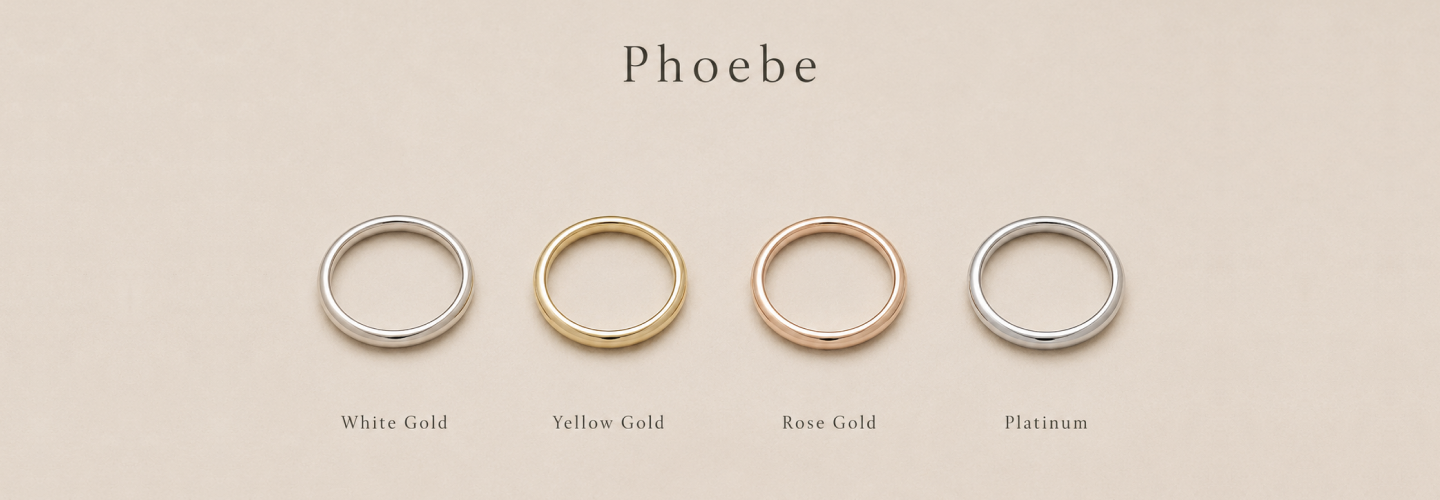
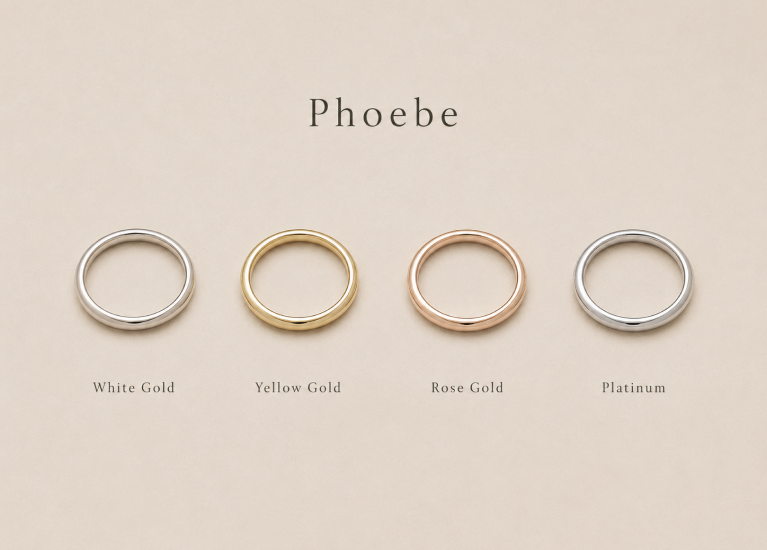
What Actually Changes Between Metals
Choosing ring metal comes down to fewer variables than the marketing suggests: color, and price. Almost everything else people worry about is smaller than they expect.
The price part has a real answer, at least here. Across our plain and detail bands, white, yellow, and rose gold are priced identically — choosing a color costs nothing extra. Platinum is the exception: it runs $150 to $250 higher than 18K gold, depending on the piece.
White Gold
White gold is the most requested finish in fine jewelry, and it's easy to see why — it's cool, neutral, and sits easily against silver watches, white gold jewelry you already own, or nothing at all.
Most white gold, including ours, gets its bright white finish from a thin rhodium plating over the base alloy, which has a faint warm cast on its own. That plating is standard across the industry and part of normal long-term care; our jewelry care guide covers what that looks like over time.
Our Phoebe 2mm in white gold is $538 — the same as yellow or rose. You can see the full range in our white gold bands collection.
Yellow Gold
Yellow gold is the oldest and most traditional of the four, and what you see is the metal itself — no plating, no treatment, just the alloy's natural warm tone.
It's also the easiest to picture apart from a trend cycle. Yellow gold has been a constant in fine jewelry for long enough that choosing it isn't really a style statement — it's closer to a preference some people simply have, the way others are drawn to cooler tones, without either one being more correct.
Phoebe 2mm in yellow gold is $538, identical to white and rose. Browse the collection in yellow gold bands.
Rose Gold
Rose gold gets its pink tone from a higher proportion of copper in the alloy than white or yellow gold contain. That copper does more than color it — it also tends to make rose gold a little harder and more scratch-resistant than the other two, a small practical upside for a ring worn every day.
The warmer tone also does something specific for detail. Our Esme band carries a raised floral motif carved into the face of the ring, and in rose gold that relief catches light with a softer, warmer glow than it does in a cooler metal.
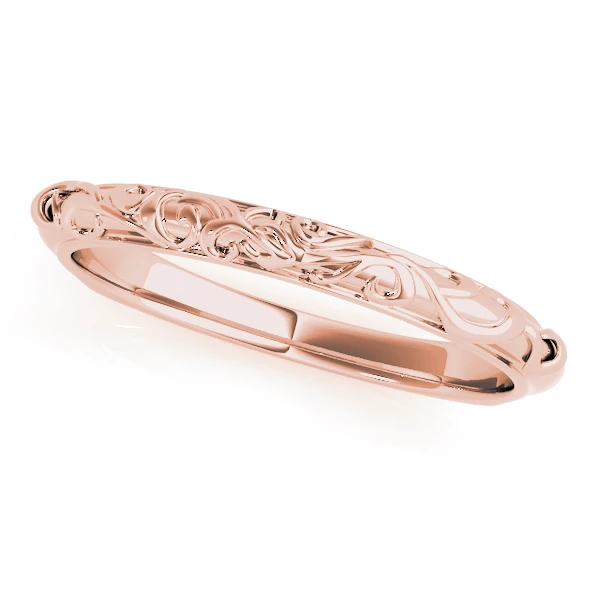
Esme in rose gold is $775. Explore more in rose gold bands.
Platinum
Platinum is the outlier of the four. It's naturally white without any plating, and it's noticeably denser than 18K gold — a platinum ring of the same size will sit heavier on the hand. That density is part of why platinum costs more.
Our Stella band — floral details and round bezel-set diamonds — is $1,035 in 18K gold and $1,185 in platinum, a $150 step that holds across most of our pieces. Against platinum's cooler, denser tone, bezel-set diamonds tend to read with slightly more contrast than they do against gold.
See the full range in platinum bands.
Choosing Yours
| Metal | Tone | Relative Weight | Price vs. 18K Gold | Available In |
|---|---|---|---|---|
| White Gold | Cool, neutral, rhodium-plated | Standard | $0 (same as YG/RG) | Phoebe, Esme, Stella, Ines Bamboo* |
| Yellow Gold | Warm, natural alloy tone | Standard | $0 (same as WG/RG) | Phoebe, Esme, Stella, Ines Bamboo* |
| Rose Gold | Warm pink, higher copper content | Standard, slightly harder | $0 (same as WG/YG) | Phoebe, Esme, Stella, Ines Bamboo* |
| Platinum | Naturally white, no plating | Noticeably heavier | +$150 to +$250 | Phoebe, Esme, Stella, Ines Bamboo* |
The most reliable way to choose isn't by trend — it's by what you already wear. If your watch, your other rings, and most of your daily jewelry are silver-toned, white gold or platinum will sit naturally alongside them. If you already lean warm — yellow gold jewelry, warm-toned metals in your home, your favorite pieces — yellow or rose gold will feel like an extension of what you're already drawn to rather than a departure.
It's also worth remembering that this is the one decision in this month's guides that doesn't undo easily. If you're building a stack, our guide on how to stack wedding bands covers mixing more than one metal deliberately, which is a different — and easier — decision than picking a single metal for a ring you'll wear alone. And if you're choosing for yourself, everything in buying your own ring applies just as directly to this decision as to any other.
For more on how each metal is made and cared for, our full metals guide goes deeper than this comparison does.
One Ring, Every Metal
The clearest way to see that this is really a personal decision, not a right answer, is to look at one design across all four options. Our Phoebe 2mm is priced and available in white, yellow, and rose gold, and in platinum — the same width, the same profile, four entirely different moods depending on which one you choose. And three of those four metals cost exactly the same, so the only real trade-off is between tone and platinum's premium — nothing else.
We also just added Ines Bamboo to the collection, a bamboo-textured band joining the same four metals — a second example of the same idea: one silhouette, and the metal is what makes it yours.
If nothing in the collection is quite right, our ring builder lets you choose a setting and a metal together from the start, and Rock Your Way exists for anything the builder can't cover.
Ten years from now, the ring itself may look a little different to you than it does today. The metal, chosen well, won't.
Design yours — or see our full metals guide if you want to go deeper before deciding.
FAQ's
Does the metal affect the price of a ring?
At SAMA, white, yellow, and rose gold are priced identically; platinum typically costs $150 to $250 more, depending on the piece.
Does rose gold scratch more than white or yellow gold?
Rose gold's higher copper content tends to make it slightly harder and more scratch-resistant than white or yellow gold.
Why does white gold need special care?
Most white gold is finished with a thin rhodium plating for its bright white color, which is a standard part of long-term jewelry care.