
How to Stack Wedding Bands: Mixing Metals, Widths, and Meaning
A good ring stack looks like it happened by accident. Three bands that seem to have found each other over time, sitting together as though no one planned it.
They are always planned.
The useful question isn't which rings to buy. It's how to stack wedding bands so they work together — and the answer starts with one band, not a finished set. What follows is how the pieces relate, and how a stack accumulates over years rather than arriving all at once.
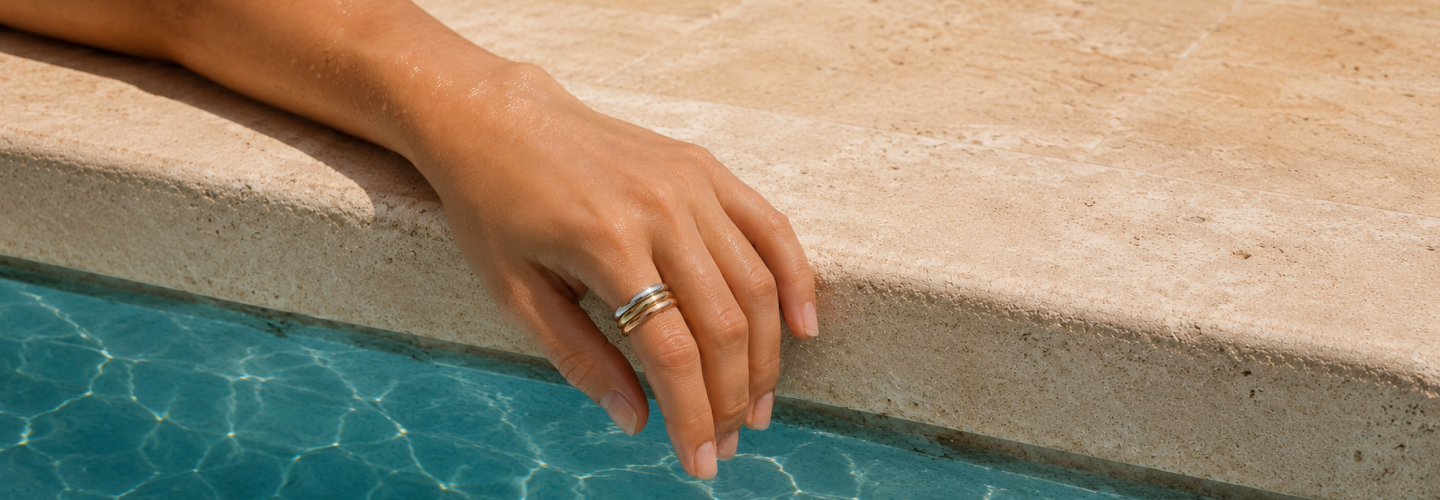
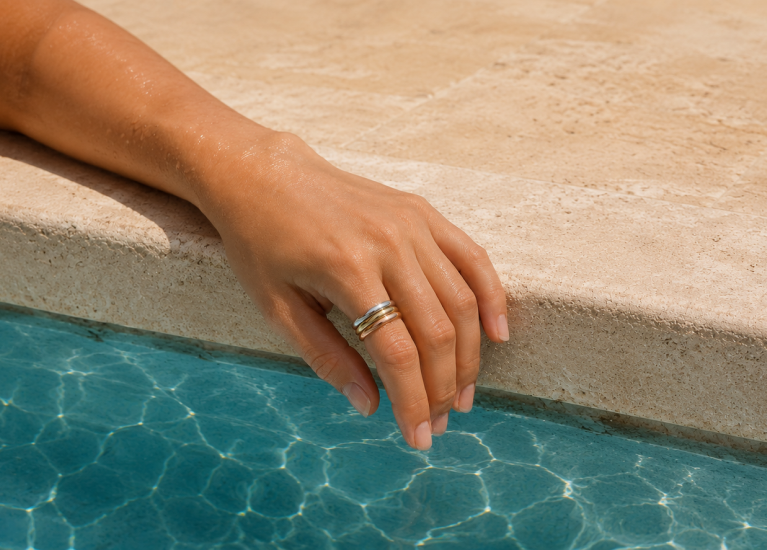
Start With One Band
Every stack has a foundation, and the first band you choose will shape every decision after it. Choose it as though it will be worn alone — because for a while, it will be.
A slim plain band is the most flexible starting point. It works on its own, sits against an engagement ring if you wear one, and leaves room for whatever you add later. Our Phoebe 2mm works well in exactly this position: a 2mm plain wedding band with a rounded interior, available in 18K white, yellow, and rose gold, and in platinum. At $538 in gold, it doesn't read as a starter piece.
If you're still deciding what you want in a ring you'll wear every day, our guide on how to choose wedding rings you'll love for years is a useful place to start before you think about stacking at all.
Width Is the Structure
Width is the first thing to get right. It's what creates rhythm.
Two bands of identical width sitting side by side tend to read as one thicker band — the eye merges them. Vary the widths and each band stays distinct. A slim band beside a slightly wider one creates contrast, and contrast is what makes a group of rings look arranged rather than doubled.
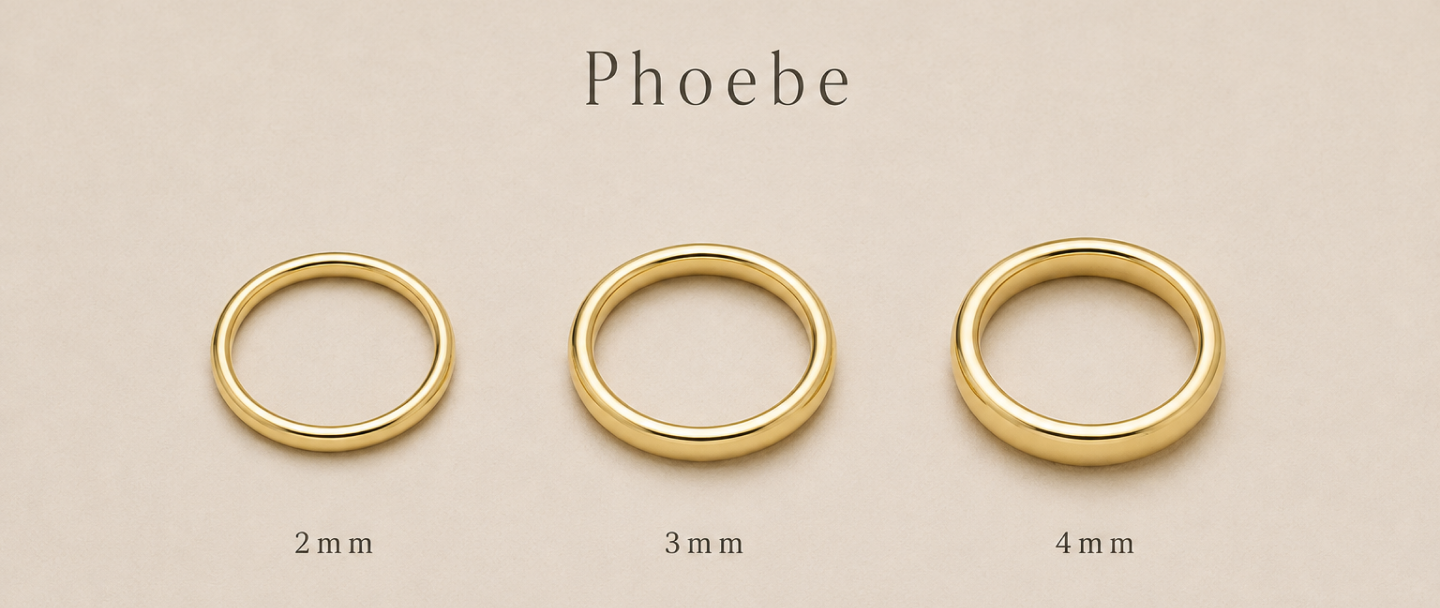
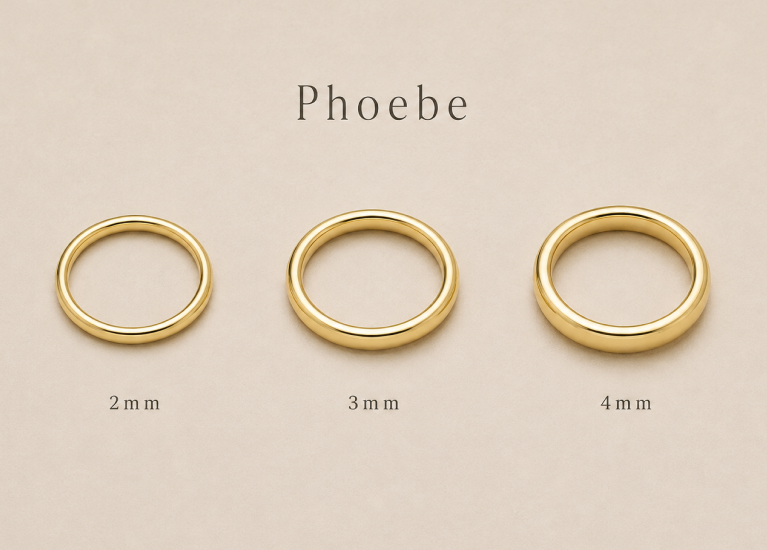
The simplest approach is to let one band carry more visual weight and keep the others slimmer. That gives the stack a center of gravity. Alternating widths — slim, wider, slim — also works, and tends to look more symmetrical on the hand.
How Many Bands?
Two to three bands on one finger is where a stack still reads as intentional; longer fingers carry more. Beyond that, it becomes a signature look, which is a legitimate choice but a more deliberate one. It's worth knowing the difference before you commit.
It's also worth remembering that a stack doesn't have to live on one finger. Splitting bands across two fingers gives each one room and often looks more considered than stacking everything in one place. Explore the full range in our plain metal bands collection to see how different widths sit
If You Already Wear an Engagement Ring
An engagement ring changes the arithmetic, because it's already doing the work a focal piece would do. The stack around it should support it rather than compete.
In practice that means keeping the bands beside it slimmer and plainer than they might otherwise be, and letting the engagement ring remain the widest point on that finger. If your ring has a detailed setting, plain bands beside it will read as intentional. If it's a simple solitaire, you have more room for texture. And if the profile of your engagement ring makes a flush fit difficult, that's worth solving before you buy — a curved or shaped band may sit better than a straight one.
Before you buy: a sizing checklist
| # | Before You Buy | Why It Matters |
|---|---|---|
| 1 | Measure at the end of the day | Fingers are at their largest in the evening |
| 2 | Account for seasonal variation | Fingers change size in heat and cold |
| 3 | Size each band individually | Don't assume multiple bands will share one size |
| 4 | Try your combination together | Several bands stacked can fit differently than one worn alone |
| 5 | Still unsure? | See our size guide for step-by-step guidance |
Mixing Metals Without It Looking Like an Accident
Mixed metals used to be treated as a mistake. They aren't. But there's a difference between mixing metals and simply wearing two different ones.
Repetition is what makes a mix look deliberate. A single yellow gold band among white gold ones reads as an outlier — as though it wandered in. Two of one metal and one of another reads as a decision. The same is true across your hands: if your stack mixes yellow and rose, echoing that combination elsewhere ties it together.
Combinations worth trying:
- Two white, one yellow — the yellow band becomes a deliberate accent rather than an interruption
- Two yellow, one rose — warm on warm, with the rose reading as depth instead of contrast
- All three metals in the same profile — when the widths agree, color is the only variable, which is the most forgiving way to mix
- One metal per finger — a split stack that repeats a pairing across two fingers rather than crowding one
Because Phoebe 2mm comes in white, yellow, and rose gold, it's a straightforward way to test this. Three of the same band in three metals gives you a mixed stack where the widths and profiles already agree, so the only variable is color. It's a good way to learn what you actually like before committing to more.
If you're drawn to one metal in particular, our yellow gold wedding bands collection is a good place to look — and we'll be covering how to choose a metal you'll still love in ten years later this month.
Adding Texture and Detail
Once the foundation is set, a detail band is what gives a stack its focal point.
The principle here is restraint. One detailed band among plain ones draws the eye exactly where you want it. Two detailed bands compete, and the effect flattens — each one cancelling out the other's interest.
Our Stella band works well in this role. Floral details and round-cut bezel-set diamonds give it presence at 1/20 total carat weight — enough to catch light without overwhelming the plain bands beside it. At $1,035 in 18K gold, it's the piece that gives a stack its focal point.
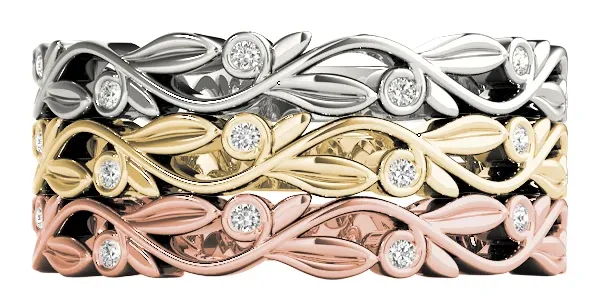
For texture rather than sparkle, Esme takes a different approach. Its nature-inspired floral motif adds detail you notice up close rather than across a room, which makes it easy to wear beside plain bands. You can see more of this in our nature-inspired bands collection.
And if the stack you're imagining doesn't exist in any collection, that's what Rock Your Way is for — our bespoke service lets you fully customize your bridal jewelry.
Building It Over Time
You don't have to buy a stack.
The stacks that look best are usually the ones assembled slowly. A band bought for one reason, another added a few years later, a third that marked something specific. That version costs less at any given moment and ends up more personal than a set purchased together — because each piece arrived for a reason.
That's where the meaning comes from, and it's the part that can't be bought all at once. A band for the year you moved cities. One for a decade of marriage, or a decade of something else entirely. One bought for no occasion at all, simply because you wanted it. Read individually they're just bands; read together they're a record of when each one seemed worth marking.
Starting with one Phoebe 2mm at $538 and adding over time is a genuinely different way to think about the cost — and 1% of every SAMA sale goes to nonprofit partners working on gender equality, LGBTQIA+ rights, youth and education equity, and mental well-being, so each addition sends something outward too.
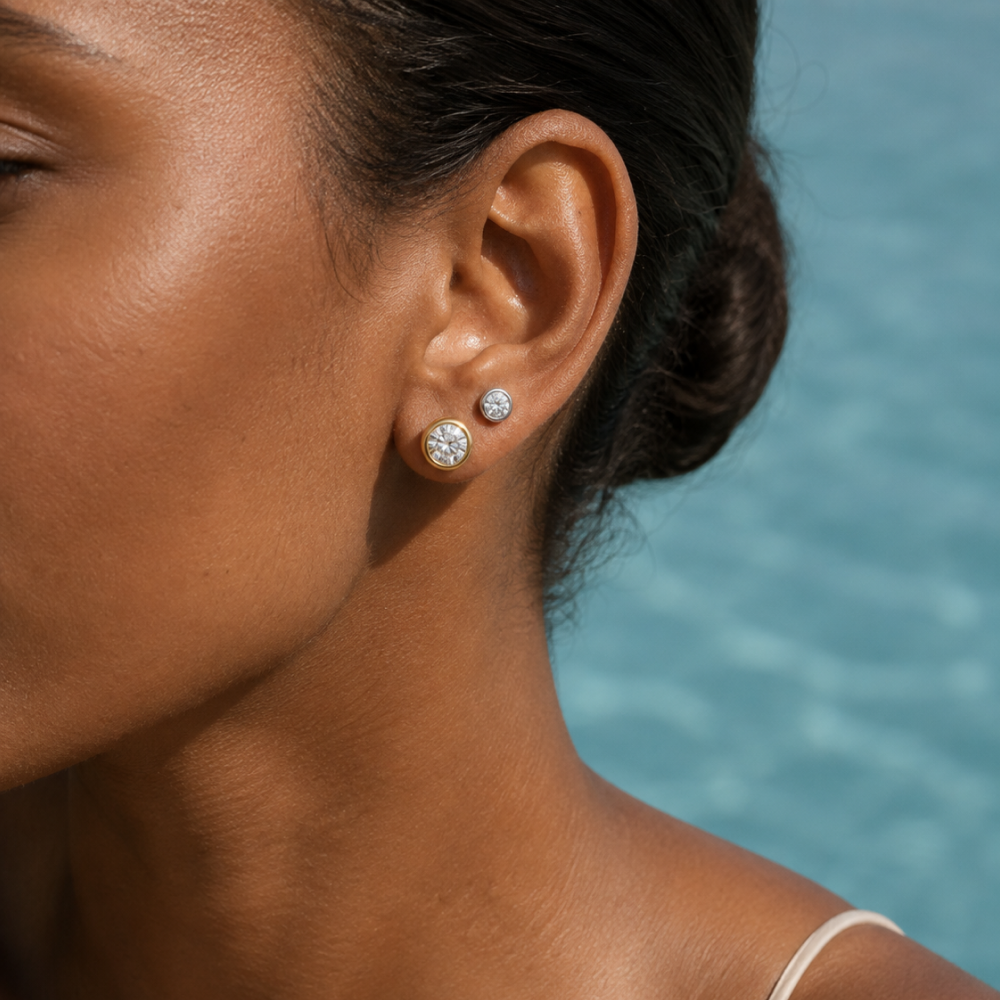
The same principles work above the neck. Stacking two pairs of studs on one ear follows the same logic as stacking bands: vary the scale, and repeat the mix. Our Vero bezel studs are well suited to it — a 1 carat pair at $1,050 in lab-grown diamonds sitting at the lobe, with a ½ carat pair at $650 above, so the sizes step rather than compete. You can see the full range of bezel studs alongside our other settings. Wearing the larger pair in yellow gold and the smaller in white picks up the same mixed-metal logic as the rings, which is what makes the two read as one considered look instead of two separate decisions.
Start Where You Are
A stack isn't a purchase. It's a timeline — and it only has to begin with one band.
Choose the first one well, learn what you like from wearing it, and add when there's a reason to. That's how the stacks that look effortless actually get made.
Explore our plain metal bands to find your starting point — or design yours if you'd rather build something from scratch.
FAQ's
How many wedding bands can you stack?
Two to three on one finger typically reads as intentional; longer fingers carry more.
Can you mix metals when stacking wedding bands?
Yes — repetition is what makes a mix look deliberate rather than accidental.
Do you have to buy a whole wedding band stack at once?
No. Stacks assembled over time tend to look better and cost less at any given moment than one bought as a set.