
Marquise, Pear, Oval or Cushion: How to Choose Your Engagement Ring Shape
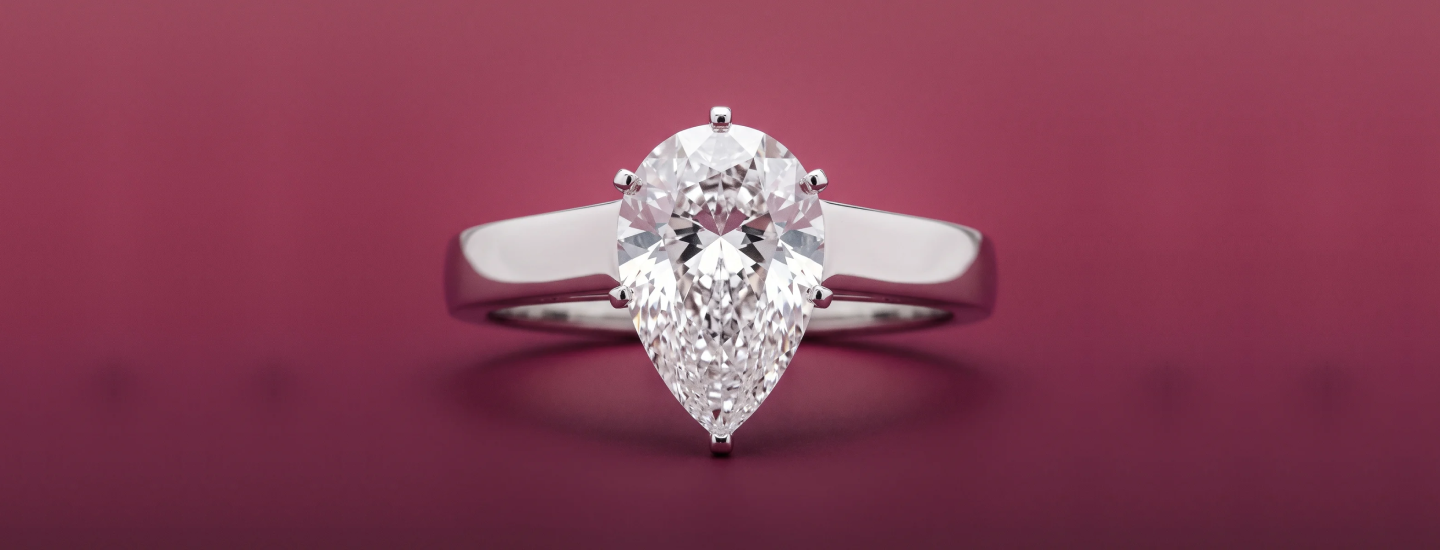
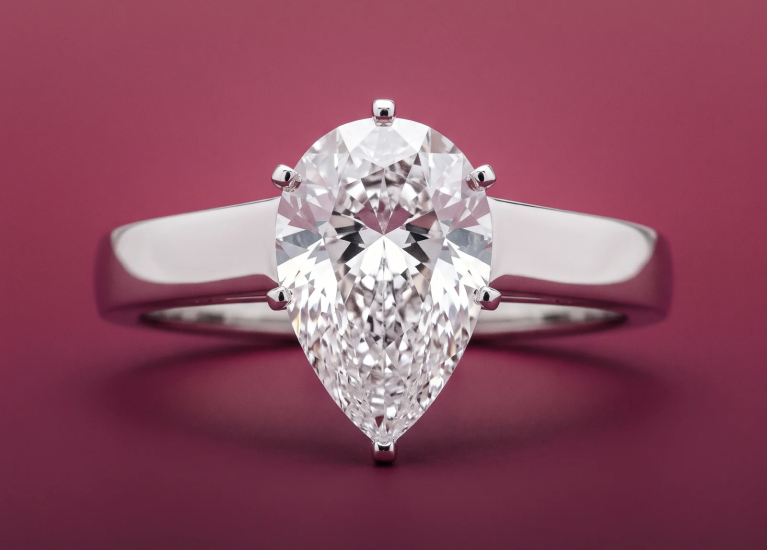
Before anyone notices the metal, the setting, or the carat weight, they notice the outline. A long, pointed marquise. A teardrop pear. A soft oval. A cushion with its rounded corners. Each one reads differently from across a table, and each asks something different of the ring around it.
Choosing a shape can feel like a taste test with no scorecard, so here is one. Four questions, asked the same way of every shape, with a SAMA ring as an example of each. By the end, you should know which outline to start with and what to do next.
Four Questions That Compare Any Shape
- What outline do you like looking at? Pointed, rounded, or soft-cornered. Start here, because it is the one answer no guide can give you.
- How will it be worn? A ring for every day and a ring for occasions can point to different shapes.
- What does the shape ask of the setting? GIA notes that pointed shapes, including marquise and pear, are more vulnerable to chipping at the points, and advises a setting that protects them.
- What do you already wear? Look at your metal, your scale, and whether your favorite pieces are curved or angular.
Answer them in order and one or two shapes usually rise to the top. If two tie, let the setting break the tie: look at a halo, a solitaire and a three-stone with each shape and notice which combination you keep returning to. Then compare them on screen, side by side, instead of from memory. Shapes are easier to judge in context than in the abstract, and a few minutes of comparing is usually all it takes.
For context, The Knot’s 2026 Real Weddings Study, a survey of 10,474 U.S. couples married in 2025, reports round as the most popular shape at 26%, with oval close behind at 25%, and emerald, princess, pear and marquise at 8% each. Popularity tells you what is common, not what is right for you.
Same Design, Four Shapes
Settings change how a ring looks as much as shapes do. A halo, a solitaire and a three-stone will each make the same outline feel different, which is why comparing three different rings side by side can mislead.
So here is one design, Aida, in all four shapes.
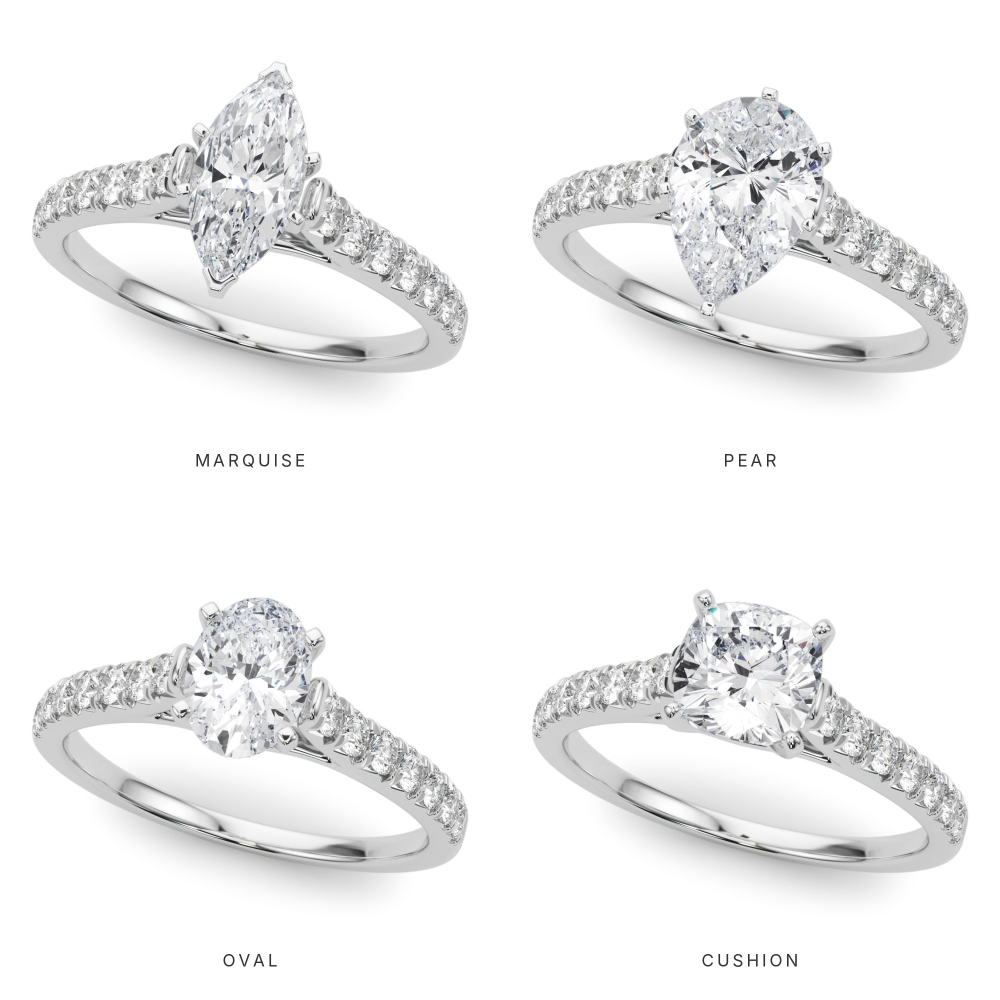
The Four Shapes
Marquise
A marquise is a long, elliptical outline with a point at each end. Those two points are the feature, so look closely at how a setting treats them. Romola sets a marquise in a halo with a pavé band, which repeats the outline in small diamonds. If you like a ring that looks sculpted and long, start here, and decide whether you want the points to stand out or sit inside a frame.

Pear
A pear has one rounded end and one point: a teardrop that borrows from both the round and the marquise. That makes it a good answer if you want one angular detail without a fully angular outline. Ciara is a pear solitaire with a wide band, a clean frame that keeps the attention on the stone. Notice which part of the pear your eye goes to first, the curve or the point. That first glance is useful information.
Oval
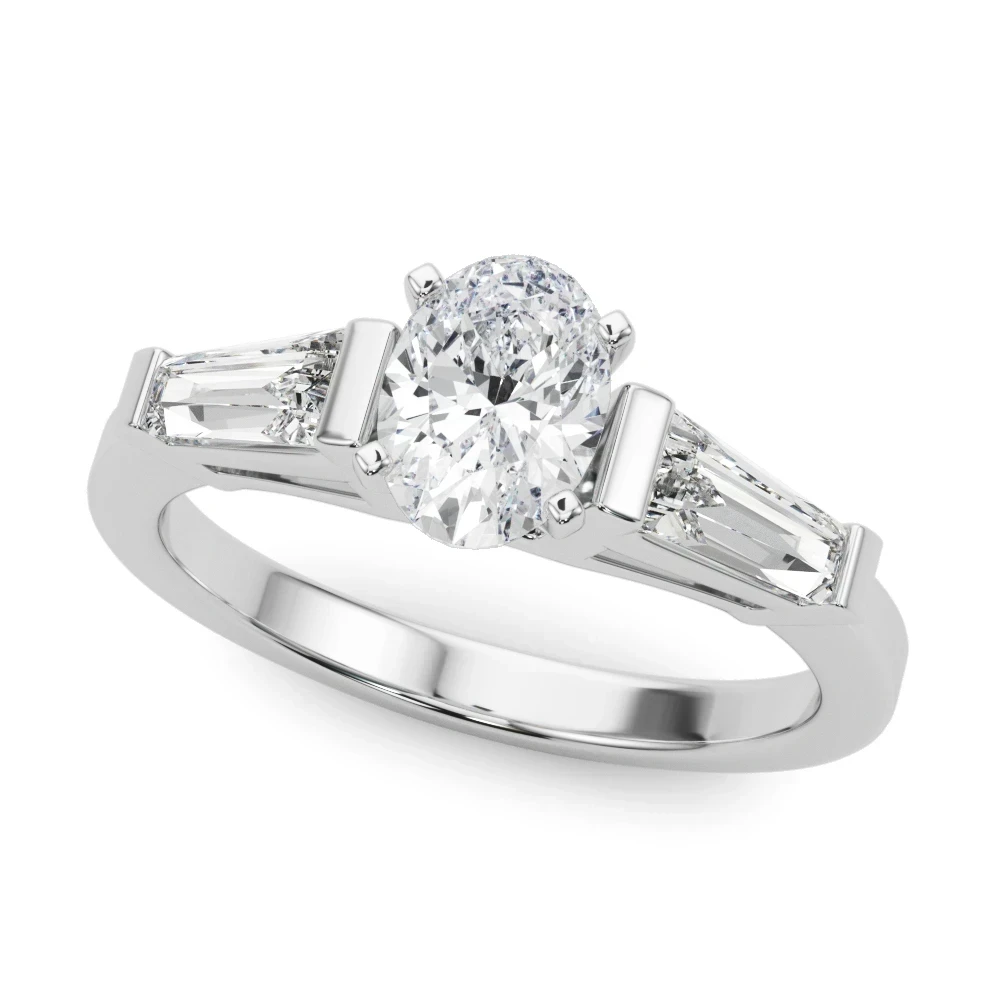
An oval is elongated and rounded all the way around, with no points to protect. Giorgia is a three-stone setting with two tapered, bar-set baguette side stones, so the curve of the oval sits between straight, clean lines. The question to ask is whether you want those side stones to echo the curve or contrast with it. If you want length without a point, this is the shape to try.
Cushion
A cushion is a square or rectangle with rounded corners, and it sits closer to an oval than to a sharp-cornered square. Aida in a cushion shows it well: a single row of prong-set diamonds wraps halfway around a slightly wider band. It suits a stone with presence and a gentle outline. If you are torn between squared and steady or long and flowing, the cushion is the one that answers “squared” without hard edges.
Compare Them at a Glance
| Shape | Example | Setting detail | A question to ask |
|---|---|---|---|
| Marquise | Romola | Halo and pavé band | Do I want the points to stand out or sit in a frame? |
| Pear | Ciara | Solitaire, wide band | Which do I notice first, the curve or the point? |
| Oval | Giorgia | Three-stone, tapered baguette side stones | Do I want length without a point? |
| Cushion | Aida | Prong-set diamonds halfway around a slightly wider band | Do I want presence with a soft outline? |
Choose the Shape and the Setting Together
The shape is the outline. The setting decides how that outline is held, so the two are one decision.
At SAMA, you choose a setting or a stone first, then choose the other, and your finished ring appears in the third step. Here is a useful test: pick one setting you like, then change only the shape. The Start with a Setting page filters by center stone shape, so you can see what shifts when the same kind of setting holds a marquise, a pear, an oval or a cushion: the balance, the frame, and the way the band meets the stone.
Prefer a ring that is already composed? Fully composed rings are selected on one page and are lab-grown, and the Ring Builder offers natural and lab-grown diamonds. Our design walkthrough covers each step, and our setting guide compares solitaire, halo and three-stone. If more than one person is choosing, see our guide to shopping together or for yourself. If a ring is not your only decision, our five decisions, in the order that makes them easy is a good next read, and so is our guide to diamond or gemstone if you are weighing the stone itself.
Start With the Outline You Keep Looking At
Pick the shape you keep returning to, then see it in a setting. Whether it is a marquise, pear, oval or cushion engagement ring, the metal, the carat and the stone type can follow.
Rather start with the stone? Start with a Diamond: natural or lab-grown.
FAQs
Which engagement ring shape is the most popular?
According to The Knot’s 2026 Real Weddings Study, round (26%) and oval (25%) lead, with emerald, princess, pear and marquise at 8% each. The most popular shape is the easiest to find, not necessarily the best fit for you.
Do shapes look different at the same carat weight?
Yes. Carat measures weight, not width, so two shapes of the same carat weight can look different in size face-up. IGI notes that shape, spread and brightness all play a part. If size matters to you, compare shapes side by side before you decide.
Do pear and marquise shapes need a protective setting?
GIA notes that pointed shapes, including pear and marquise, are more vulnerable to chipping at the points, and advises choosing a setting that protects them, such as V-shaped prongs or a partial bezel. Ask how any setting holds the point before you choose.
Can I choose my shape in the Ring Builder?
Yes. The Start with a Setting page filters by center stone shape, and you can start from a stone instead if you prefer. Fully composed rings come in a variety of shapes.