
How Diamond Carat Size Really Looks: A Practical Guide for Couples
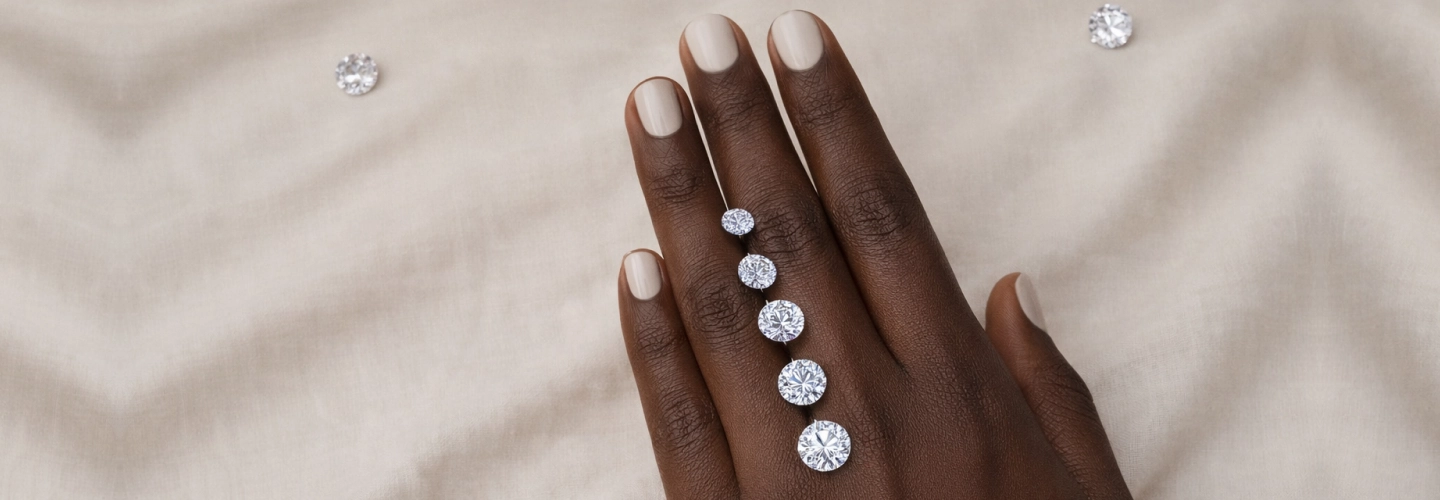
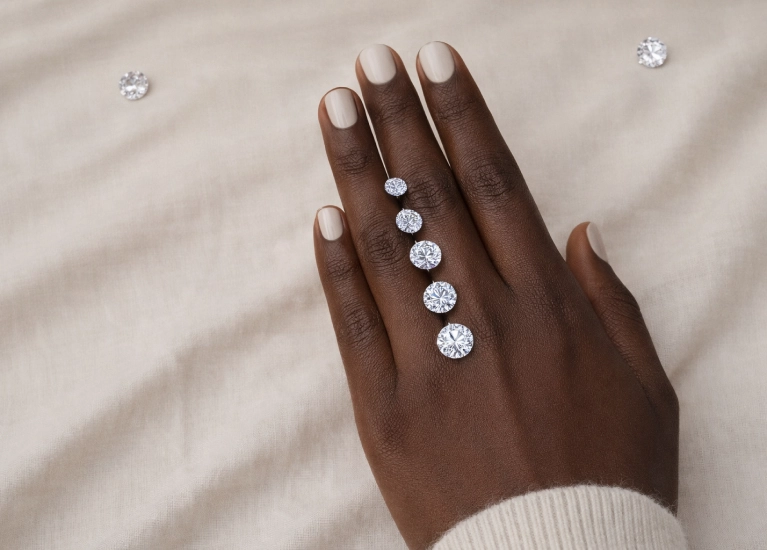
When choosing a diamond, carat size is often the first thing people focus on—and the most misunderstood.
It’s easy to assume bigger is always better. But in reality, the right carat size isn’t about maximizing size. It’s about finding what feels balanced, intentional, and true to you.
If you’re still deciding between diamond types, you may also want to explore our guide on natural vs. lab-grown diamonds, where we break down how origin, value, and priorities play into your decision.
This guide will help you understand how carat size actually looks—and how to choose what works for your lifestyle, not just expectations.
What Diamond Carat Actually Means
Carat refers to a diamond’s weight, not its visible size.
Two diamonds with the same carat weight can look completely different depending on their shape, cut, and proportions. That’s why a 1 carat diamond doesn’t always look identical across rings.
How Different Carat Sizes Look in Real Life
Here’s a general way to think about common carat sizes:
- 1 carat
A classic, balanced size. Understated yet noticeable—ideal for everyday wear.
- 1.5 carats
A subtle step up. Offers more presence while still feeling refined
- 2 carats
2 carats
- 3 carats and above
Bold and high-impact. Often chosen for those who want a more statement-forward look.
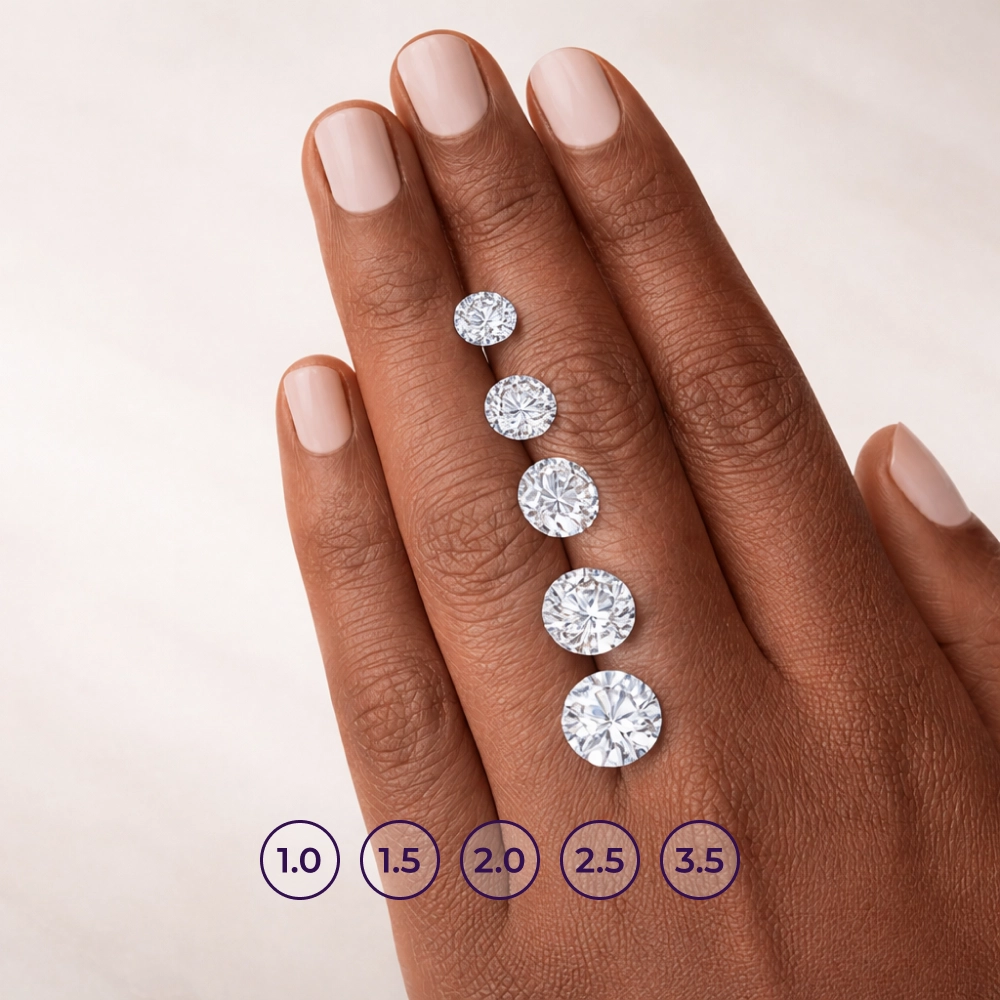
For a more interactive way to explore size, you can also browse our diamonds by carat size, where you can compare 1ct, 2ct, and 3ct options.
What Makes a Diamond Look Bigger (or Smaller)
Carat weight is only part of the story. The way a diamond appears depends heavily on design.
Shape
Elongated shapes like oval, pear, and marquise tend to look larger than round diamonds of the same carat weight.
Your setting can dramatically influence how large your diamond appears:
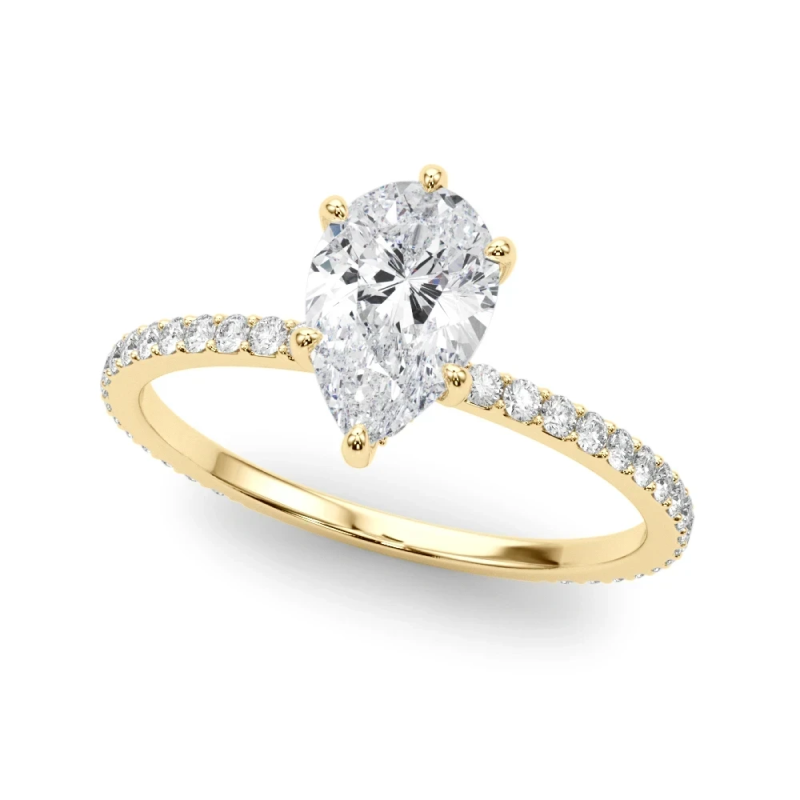
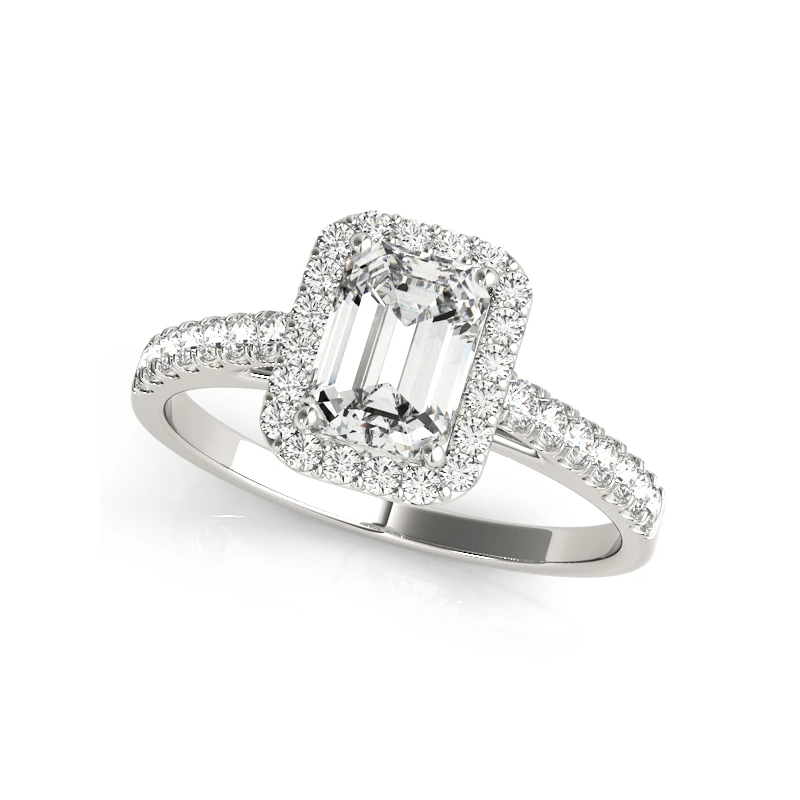
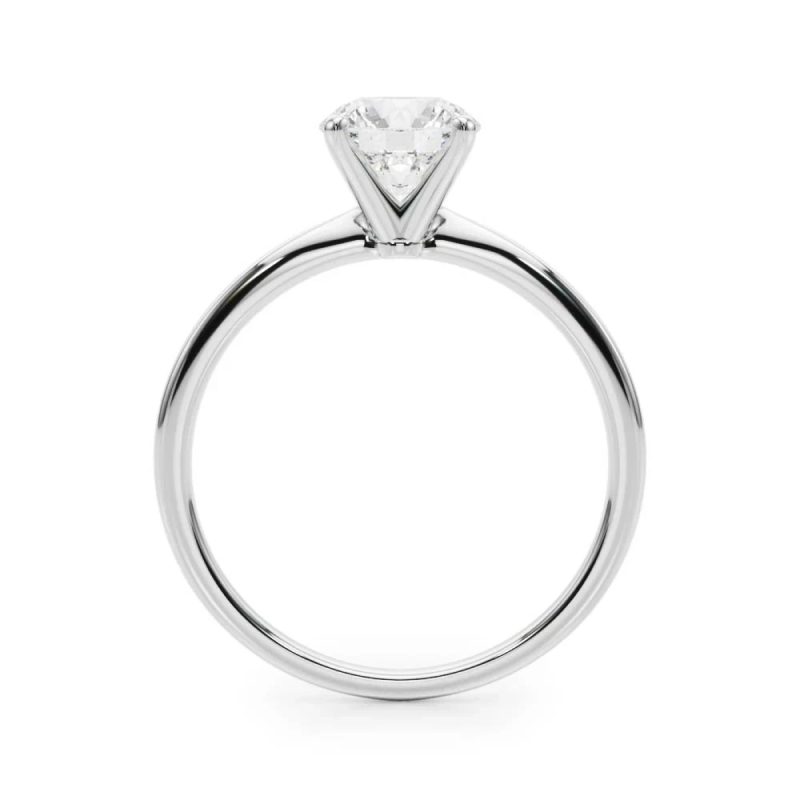
If you're still exploring styles, browse our engagement ring collection to see how different settings impact overall look and feel.
Finger Size
A diamond may appear larger on smaller fingers and more subtle on larger ones.
Cut Quality
A well-cut diamond reflects more light, making it appear brighter—and often larger.
How Carat Size Looks on Your Hand (A More Realistic View)
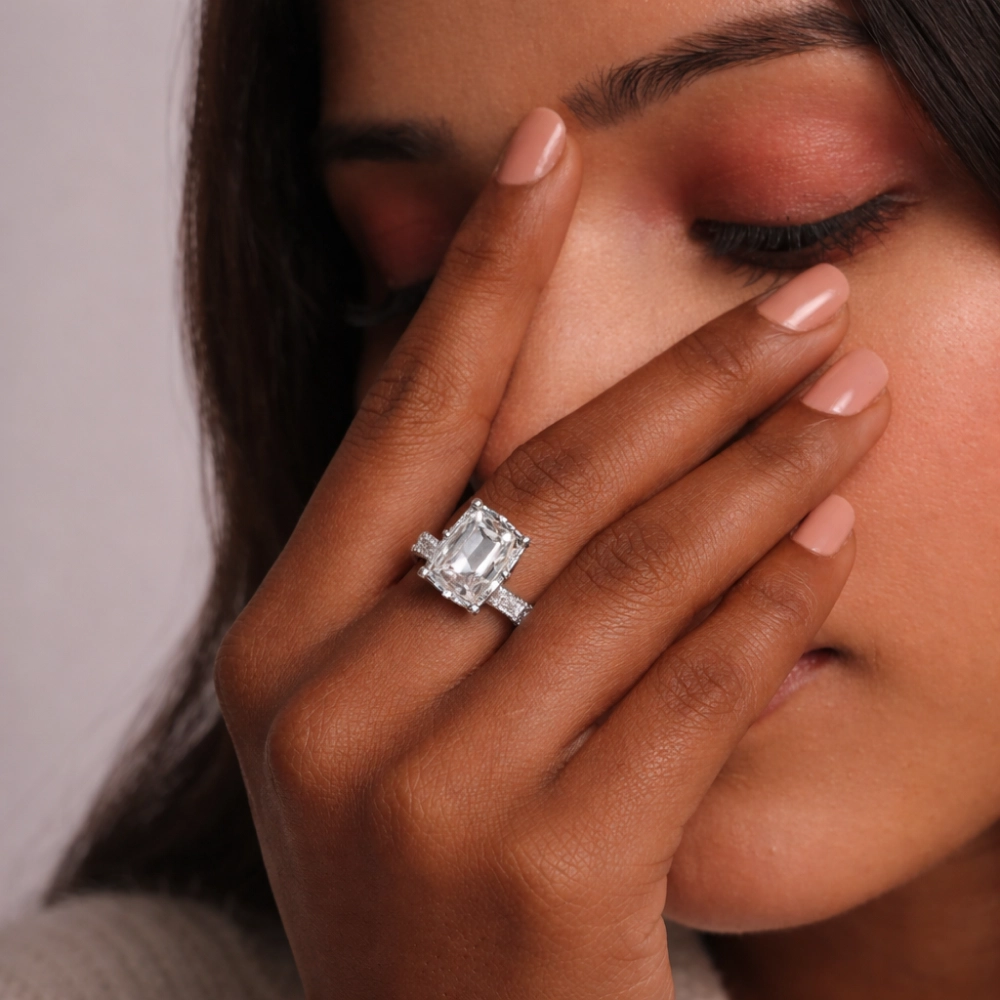
Seeing diamonds in isolation can be misleading. What matters most is how they look on the hand.
Seeing diamonds in isolation can be misleading. What matters most is how they look on the hand.
If you’re comparing sizes, this can often be more helpful than measurements alone.
Why Many Couples Are Choosing Larger Stones Today
For many couples, size is no longer limited in the same way it once was.
As we explored in our natural vs. lab-grown diamond guide, lab-grown diamonds offer the ability to prioritize carat size while still maintaining high standards for quality and transparency.
But what’s more meaningful is the shift in mindset:
It’s not just about going bigger—it’s about choosing intentionally.
Some prioritize size.
Others prioritize origin, symbolism, or design.
There’s no single “right” answer—only what feels right to you.
How to Choose the Right Carat Size for You
Choosing a diamond size is personal. Instead of focusing only on numbers, consider:
- Your lifestyle
Do you want something low-profile and practical, or more statement-making?
- Your aesthetic
Minimal and timeless, or bold and expressive?
- Your priorities
Size, origin, craftsmanship, or meaning?
- Your setting choice
The design of the ring can dramatically change how the diamond feels on your hand.
The most meaningful rings aren’t the biggest—they’re the ones that feel like a natural extension of you.
The Takeaway
Carat size is just one part of the story.
The way a diamond looks—and more importantly, how it feels to wear—comes down to a combination of design, proportion, and personal preference.
Whether you’re drawn to something understated or more expressive, the right choice is the one that reflects your values, your lifestyle, and your story.
Explore diamonds by size, shape, or setting—or begin creating a ring that’s entirely your own.