
Prong, Bezel, or Bar: Choosing Diamond Studs for Everyday Wear
You've decided on diamond studs. Maybe you've even settled the carat and the shape. Then you start comparing pairs and hit a wall of photographs that look almost identical — the same round diamond, the same gold, differing only in the small structure of metal holding the stone in place.
That structure is the setting, and it's the decision that matters most. Not because of how it looks in the photo, but because it determines how the earrings behave once they're on: what they catch on, how they show light, how you clean them, and whether you're still reaching for them in five years.
Every stud in this guide holds a 1 carat round lab-grown diamond (unless otherwise mentioned), so the only thing changing is the setting. That makes this a straightforward diamond stud settings comparison — three ways of holding the same stone, judged by daily life rather than by looks. If you're still deciding on carat and shape, our guide on how to choose diamond stud earrings covers that first. This one is about what the setting does.
Why the Setting Is the Decision That Matters
A setting isn't a finish applied to a finished stud. It's the structure the whole earring is built around, and it quietly decides how the piece fits into your day. A setting is a wear decision before it's a style one.
Four things change with the setting, and they're the four worth judging any stud by:
- How it holds the stone — where the metal grips, and how much of the diamond it commits to holding
- What it catches on — how far the setting sits off the ear, and how much of it can snag fabric or hair
- How it shows light — how much light reaches the diamond from the sides, which changes how bright it reads
- How you clean it — how easily dust and product build up, and how easily they rinse away
None of these makes one setting better than another. They make each setting better for a particular way of living. The rest of this guide walks through the three main options against exactly these four measures.
Prong Settings: Open and Bright
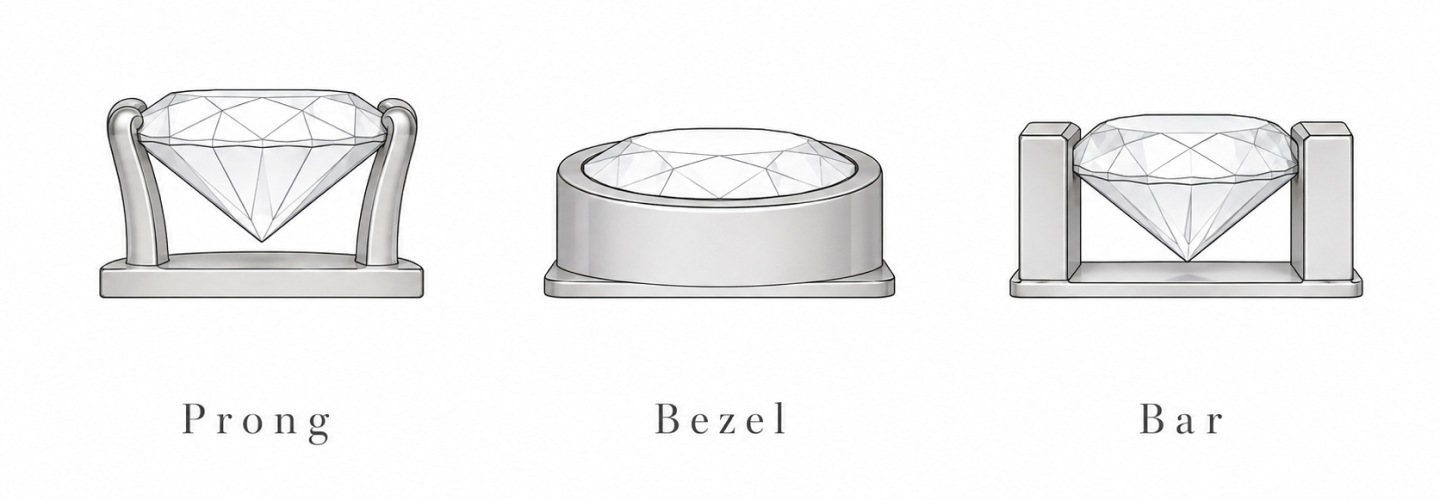
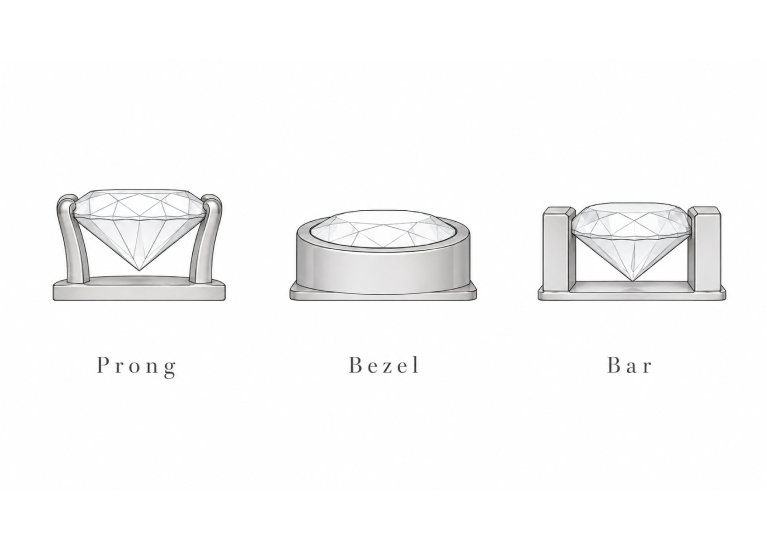
The prong setting is the one most people picture when they think of a diamond stud: a small cluster of metal claws that lift the diamond and hold it at a few points, leaving the rest of the stone open to the air.
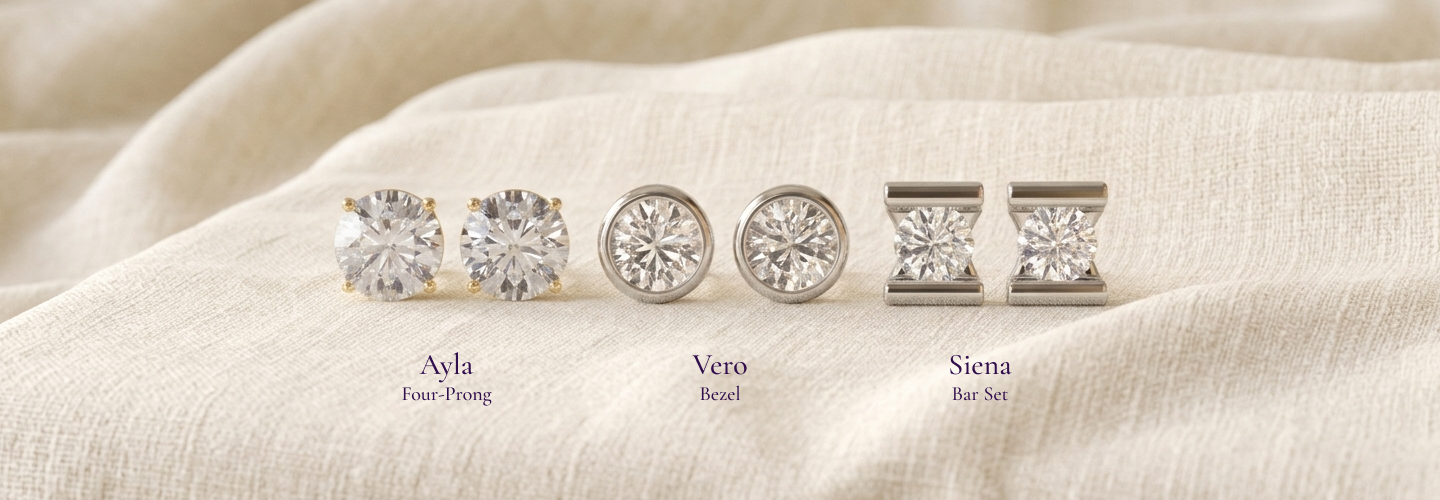
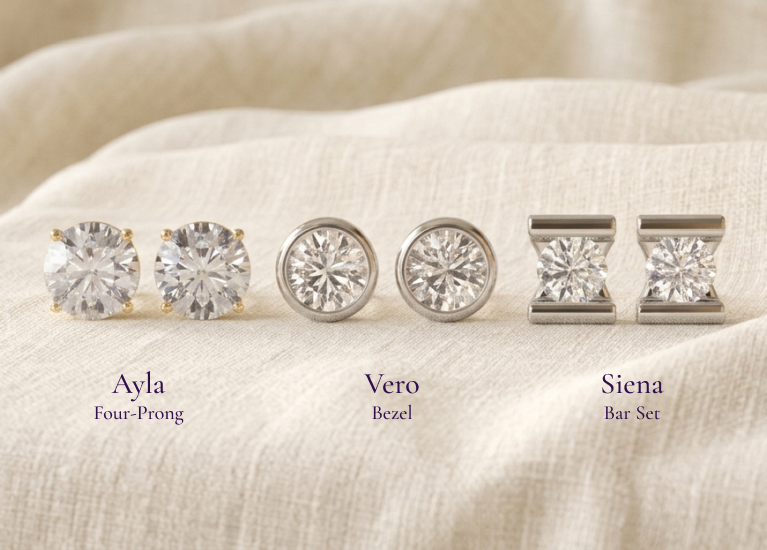
Our Ayla studs are the classic version — a four-prong setting in 14K white or yellow gold, holding a 1 carat round diamond up and open. Because so little metal touches the stone, light reaches it from nearly every angle, and open settings like this tend to show the most brightness of the three.
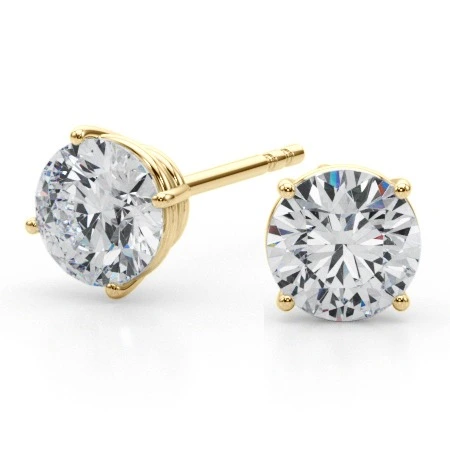
That openness is also the trade. A prong setting sits up off the ear, and raised prongs are the most likely of any setting to catch on a sweater, a scarf, or your hair. The same openness makes them the easiest to rinse clean, though product and dust can gather in the small gaps behind the stone where the prongs meet. Over years of daily wear, prong tips can also wear down and occasionally need to be checked or retipped by a jeweler — not often, but it's part of owning them.
Prongs suit someone who wants maximum sparkle and doesn't mind a setting that stands up rather than sits flush. If that's you, our classic prong studs are the place to start.
Bezel Settings: Smooth and Protected
A bezel takes the opposite approach. Instead of gripping the diamond at points, it wraps a continuous rim of metal all the way around the stone's edge, holding it from every side at once.
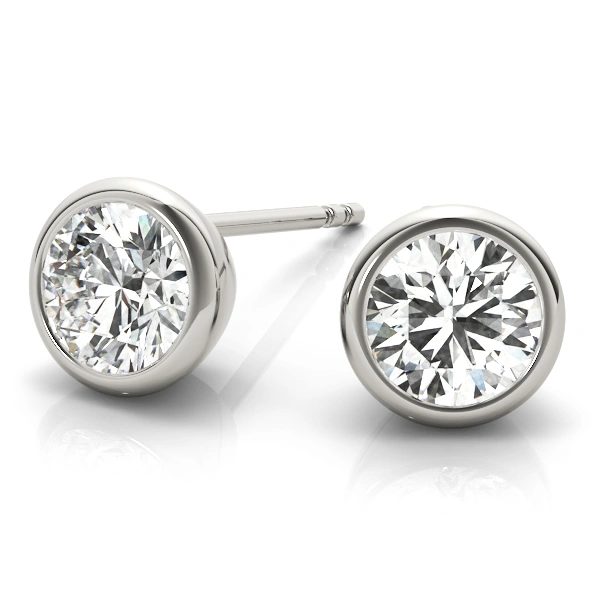
Our Vero studs are the fully enclosed version — a smooth band of 14K gold, available in white, yellow, or rose, circling a 1 carat round diamond. That rim does two things a prong can't. Its profile is smooth and low, so there's very little for fabric or hair to catch on, and the metal shields the diamond's edge — the part of the stone most exposed to knocks.
The trade runs the other way from prongs: because the rim wraps the sides of the diamond, less light reaches the stone from those angles, so a bezel tends to read a touch softer and deeper than an open prong rather than as bright. Cleaning is simple — the smooth surface wipes and rinses easily, with only the inner edge of the rim to keep an eye on.
This is the setting to consider if you genuinely never take your studs off. The smooth profile and shielded edge make it the most forgiving choice for the gym, for sleep, for small hands that grab, for any life where jewelry has to keep up rather than be kept safe. If a smaller stone suits you better, Vero also comes as a ½ carat pair. And for a second bezel option at a lower price, Noor is a bezel stud at $950 in white or yellow gold. You can compare them in our bezel studs collection.
Bar Settings: Structured and Modern
The bar setting sits between the other two. Rather than gripping at points like a prong or enclosing the whole edge like a bezel, it braces the diamond between two wide, flat bars of metal on opposite sides, leaving the other two sides of the stone open.
Our Siena studs use this setting — two clean bars in 14K white, yellow, or rose gold, framing a 1 carat round diamond. The result is a genuine middle path: more of the stone stays open to the light than in a bezel, so it reads brighter, while the two bars still shield the diamond more than bare prongs do. With two sides open, it cleans about as easily as a prong setting. The look is the real draw — architectural, linear, and distinctly modern in a way neither of the other settings is.
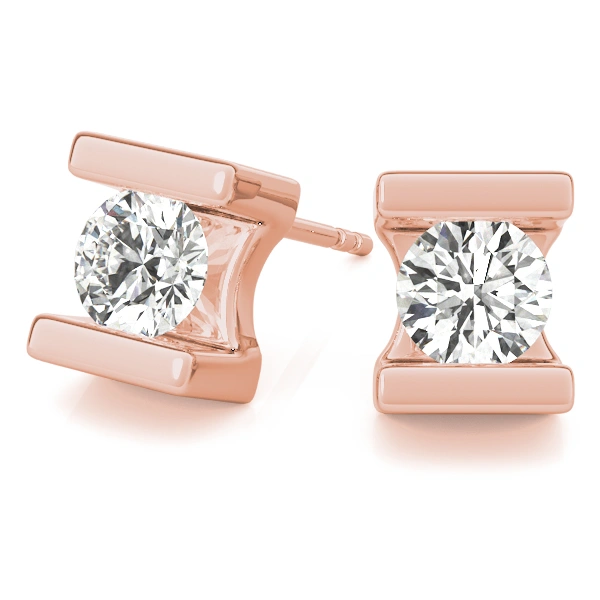
The trade here is less about wear and more about commitment. The bar setting is the most design-forward of the three, and at $1,400 it's also the most expensive, so choosing it is as much a style decision as a practical one. It suits someone who wants a contemporary look and is happy for their studs to be noticed as a design, not just as diamonds.
Choosing by How You Live
Set side by side, the three settings sort themselves less by taste than by daily life.
| Setting | Holds the Stone | Catches On | Shows Light | Cleaning | Price | Metals |
|---|---|---|---|---|---|---|
| Prong (Ayla) | Grips at 4 points, open beneath | Most likely — raised, open profile | Most — open on all sides | Easy, but gaps trap product | $225 - $1,400 | 14K WG, YG |
| Bezel (Vero) | Continuous rim, full enclosure | Least — smooth, low profile | Most — open on all sides | Easiest — smooth surface | $650–$2,200 | 14K WG, YG, RG |
| Bezel (Noor) | Continuous rim, full enclosure | Least — smooth, low profile | Most — open on all sides | Easiest — smooth surfacet | $950–$2,200 | 14K WG, YG |
| Bar (Siena) | Braced between 2 flat bars | Moderate — 2 sides open | More than bezel, less than prong | Easy — 2 open side | $650–$1,400 | 14K WG, YG, RG |
If your studs need to survive everything — worn to sleep, to the gym, and never thought about — a bezel like Vero is the most forgiving. If you want the brightest possible sparkle and don't mind a setting that sits up off the ear, a prong like Ayla shows the most light. And if the look matters as much as the wear, a bar setting like Siena offers a modern, architectural profile with a balance of light and protection in between.
For 1 carat studs, the three sit at different price points: Ayla is $800 and Vero at $1050 and Siena at $1400. All three are available in ½ carat for a daintier look and set with lab-grown diamonds, which you can read more about in our lab-grown diamond guide — and whichever setting you choose, 1% of your purchase goes to a nonprofit cause you select at checkout.
Whatever you land on, a little care keeps any setting looking its best; our jewelry care guide covers cleaning, and every pair is backed by our lifetime warranty.
Once You've Chosen
Setting is the decision that shapes how you'll live with your studs. Everything after it is lighter.
Once it's settled, our guide on how to style diamond stud earrings covers wearing them day to day, and if you're buying this pair for yourself, buying your own ring applies just as well to earrings — you know better than anyone how you'll actually wear them.
The best setting isn't the brightest or the most protected. It's the one that matches the life your studs have to keep up with.
Explore our diamond studs to compare settings in person — or start with bezel studs if you want the most everyday-ready option.
FAQ's
What's the difference between prong, bezel, and bar diamond stud settings?
Prongs hold the stone at a few points and leave it open to light; a bezel wraps the stone in a continuous metal rim; a bar setting braces the stone between two flat bars, leaving two sides open.
Which hand should you wear a ring you bought yourself?Which diamond stud setting is best for everyday wear?
A bezel setting is generally the most forgiving for daily wear, since its smooth, low profile has the least to catch on.
Do bezel-set diamonds sparkle less than prong-set ones?
Bezel settings enclose more of the stone's edge, which lets in less side light, so they tend to read a touch softer than an open prong setting.